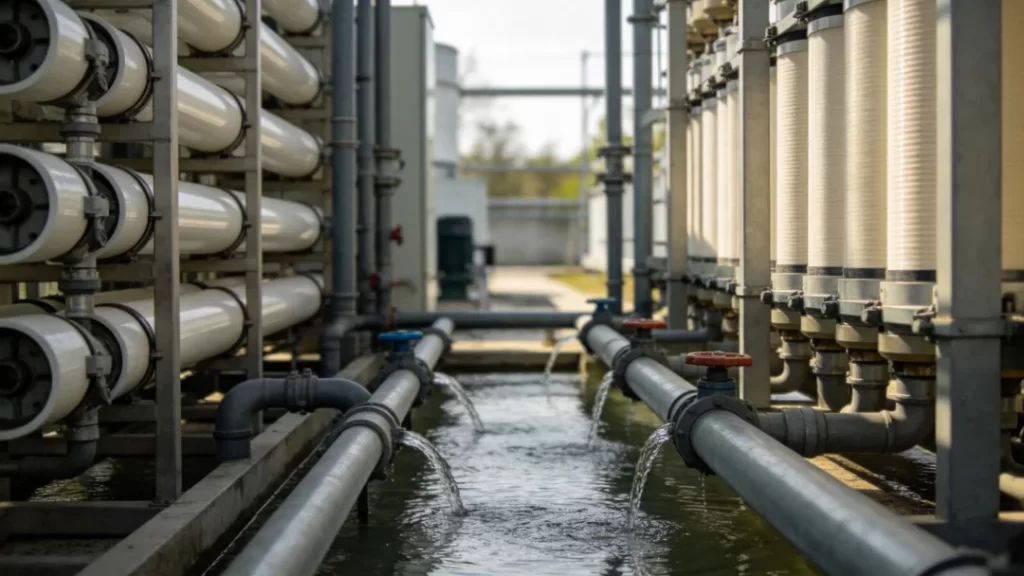





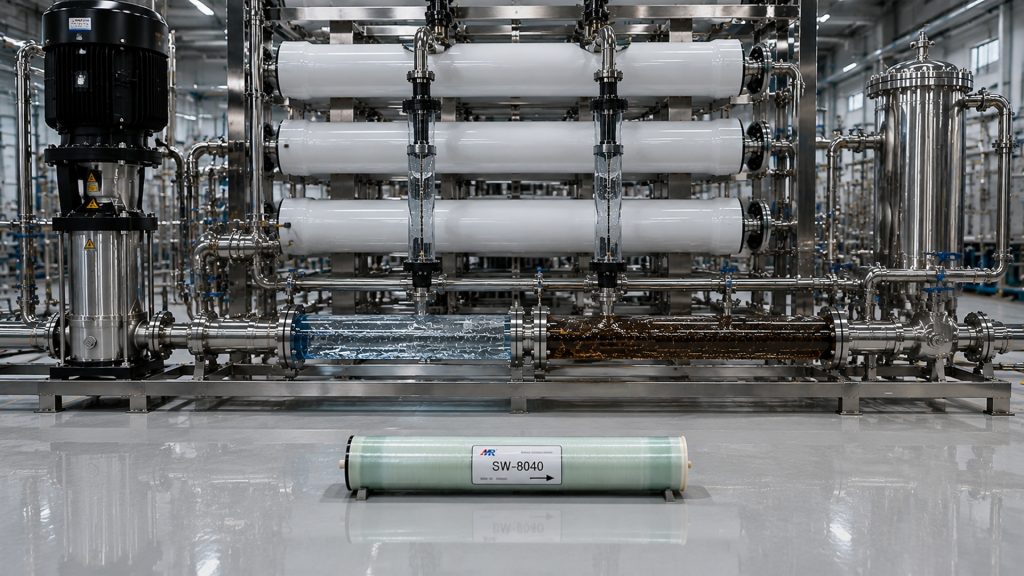
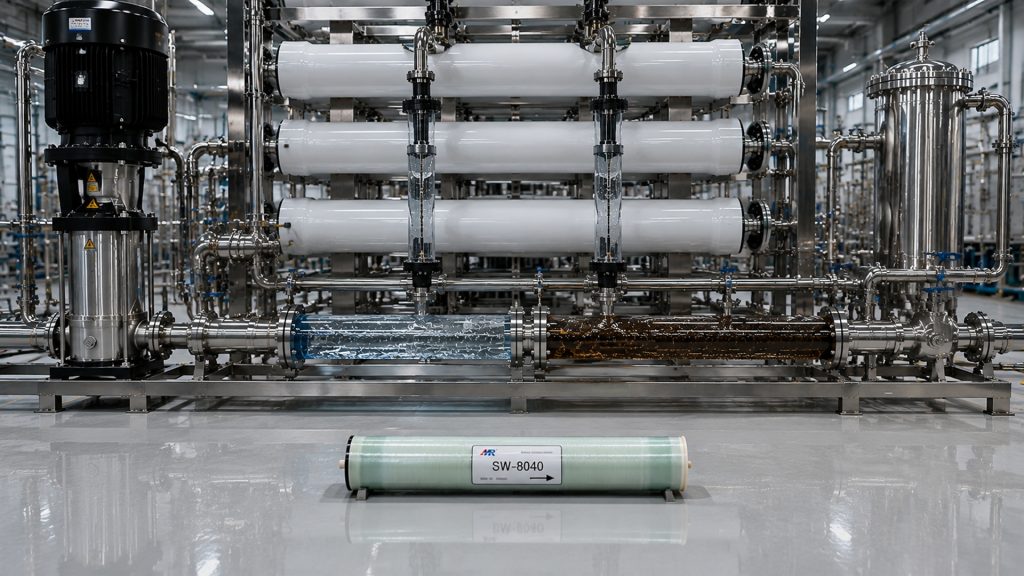
An RO membrane is the core component that enables reverse osmosis filtration by separating purified water from dissolved contaminants. Through a pressure-driven process, the membrane allows water molecules to pass while rejecting salts, minerals, heavy metals, and other unwanted substances. The working mechanism of an RO membrane depends on membrane structure, pressure control, and selective separation performance. Understanding how RO membranes work helps engineers and buyers evaluate filtration efficiency, system design, and water treatment performance for different applications.
The RO Membrane Uses Pressure to Drive Water Separation
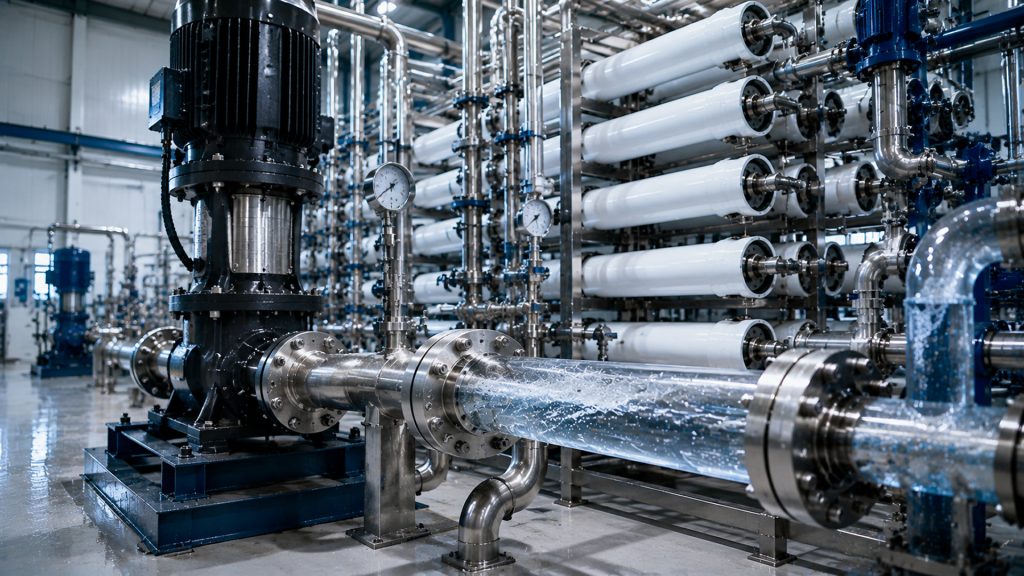
An RO membrane works by using external pressure to push feed water through a semi-permeable membrane layer and achieve effective separation. In natural osmosis, water molecules move from a solution with lower dissolved substance concentration to a solution with higher concentration through a membrane. Reverse osmosis changes this natural movement by applying pressure to the feed water, forcing water molecules to pass through the membrane while dissolved salts, minerals, and other contaminants are prevented from crossing. This pressure-driven process is the foundation of RO membrane filtration technology.
The pressure applied during RO membrane operation provides the necessary force to overcome osmotic pressure and control water movement. When pressurized feed water reaches the membrane surface, water molecules can pass through the selective barrier and form purified water, while rejected substances remain on the concentrated water side. By maintaining suitable pressure conditions, the RO membrane can achieve efficient separation, stable water production, and consistent reduction of dissolved contaminants during continuous filtration.In complete reverse osmosis equipment, pressure control components work together with RO membranes to maintain stable filtration performance.
The RO Membrane Relies on Pressure to Reverse Natural Osmosis
An RO membrane uses external pressure to reverse the natural osmosis process and achieve molecular-level water separation. Under normal osmosis conditions, water naturally moves toward a solution containing a higher concentration of dissolved substances until equilibrium is reached. Reverse osmosis applies pressure to the concentrated water side, creating a force that exceeds osmotic pressure and drives water molecules to move in the opposite direction through the membrane layer.
This pressure-driven mechanism enables the RO membrane to separate purified water from dissolved contaminants effectively. By controlling the direction of water movement, the membrane allows water molecules to pass through while restricting substances such as dissolved salts and minerals. The ability to overcome natural osmotic pressure is a key reason why RO membrane technology can provide high purification performance compared with conventional filtration methods.
The Applied Pressure Pushes Water Molecules Through the RO Membrane Layer
The pressure applied during reverse osmosis provides the driving force required for water molecules to pass through the selective layer of an RO membrane. When feed water enters the system under sufficient pressure, water molecules move across the membrane structure and become part of the purified water stream. At the same time, dissolved salts, minerals, and other unwanted substances experience greater resistance and remain on the feed water side.
Maintaining suitable pressure levels is essential for stable RO membrane performance. Insufficient pressure may reduce water production because the driving force cannot effectively overcome osmotic resistance, while excessive pressure may increase energy consumption and place additional stress on system components. Proper pressure control helps the RO membrane maintain a balance between water transport efficiency and contaminant rejection throughout continuous filtration operation.
The RO Membrane Allows Water Molecules to Pass Through Selectively
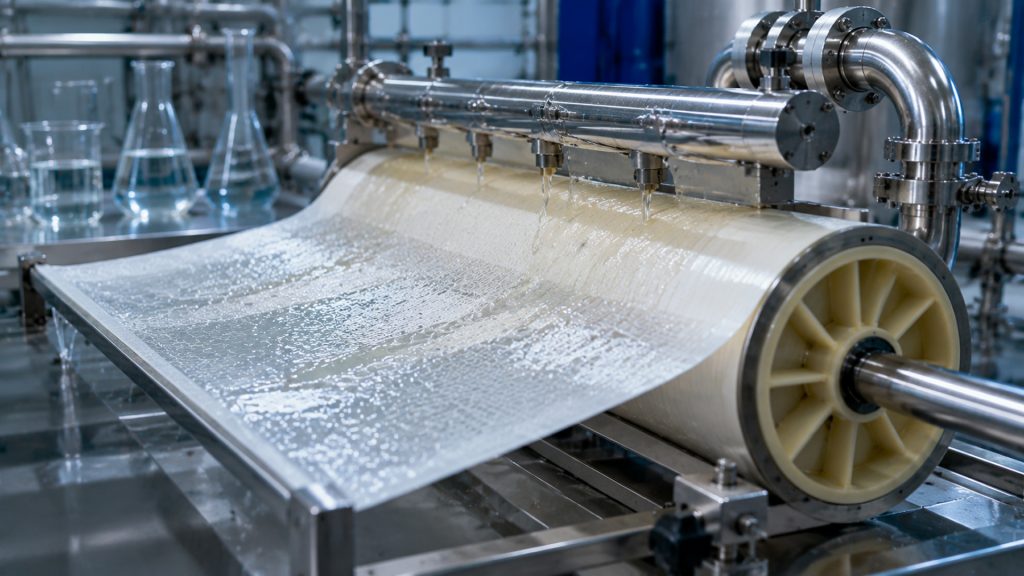
The selective structure of an RO membrane determines how water molecules and dissolved contaminants are separated during the filtration process. Unlike conventional filters that mainly rely on physical size exclusion, an RO membrane uses a highly dense selective layer to control molecular movement. The membrane allows small water molecules to pass through while restricting dissolved substances such as salts, minerals, heavy metals, and other impurities. This selective permeability enables the RO membrane to achieve high purification performance at a molecular level.
The ability of an RO membrane to selectively transport water molecules is based on the difference between water and dissolved substances. During filtration, pressurized feed water reaches the membrane surface, and water molecules can move through the selective layer more easily than larger dissolved components. Different water treatment applications may require different membrane technologies, including ultrafiltration membrane and MBR membrane, depending on separation requirements and water quality conditions. By controlling which substances can pass through the membrane, RO technology separates purified water from concentrated contaminants and provides stable filtration results for different applications.
Substances Separated by an RO Membrane During Filtration
| Substance Type | Filtration Behavior in RO Membrane | Separation Result |
|---|---|---|
| Water molecules | Pass through the selective layer | Become purified water |
| Dissolved salts | Restricted by membrane structure | Remain in concentrate water |
| Minerals | Rejected due to molecular characteristics | Reduced in treated water |
| Heavy metals | Blocked during molecular separation | Removed from water stream |
| Organic contaminants | Partially or effectively rejected depending on properties | Improved water quality |
The RO Membrane Uses Selective Separation to Filter Water Molecules
The filtration ability of an RO membrane depends on its selective separation mechanism, which controls the movement of water molecules and dissolved substances during operation. When feed water contacts the membrane surface, the selective layer acts as a molecular barrier that allows water molecules to pass while limiting the transport of unwanted components. This separation occurs because different substances have different molecular characteristics and interactions with the membrane material.
This selective filtration process allows an RO membrane to achieve precise separation that cannot be easily achieved by traditional filtration methods. Conventional filters usually remove larger particles based on physical size, while RO membranes can reduce dissolved substances that exist at the molecular level. By combining water permeability with contaminant rejection, the membrane provides efficient purification while maintaining continuous water production.
The RO Membrane Structure Controls Water Molecule Movement
The structure of an RO membrane plays an important role in controlling how water molecules move during filtration. The membrane contains a thin selective separation layer designed with specific properties that allow water molecules to pass through while restricting dissolved salts, minerals, and other contaminants. This layer creates a controlled pathway for water transport and determines the membrane’s separation capability.
The controlled movement of molecules through an RO membrane depends on the balance between water permeability and rejection performance. If the membrane allows excessive substances to pass through, purification efficiency may decrease, while insufficient water transport can reduce production capacity. A properly designed selective layer enables the RO membrane to maintain stable water flow, effective contaminant removal, and reliable filtration performance during long-term operation.
The RO Membrane Rejects Dissolved Salts and Impurities During Filtration
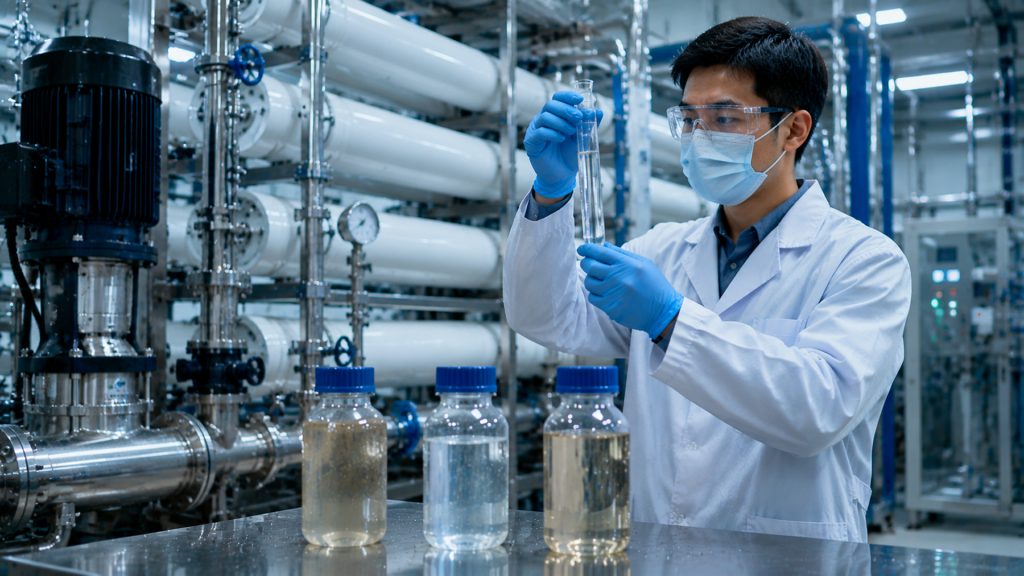
During the reverse osmosis process, an RO membrane separates purified water from concentrated contaminants through a selective rejection mechanism. When pressurized feed water reaches the membrane surface, water molecules can pass through the selective layer and become permeate water, while dissolved salts, minerals, and other unwanted substances are prevented from entering the purified water stream. These rejected substances remain on the feed water side and gradually form the concentrate stream during continuous filtration.
The rejection capability of an RO membrane depends on several factors, including membrane structure, contaminant characteristics, and operating conditions. The selective layer determines which substances can pass through and which components are retained. This separation mechanism allows RO systems to effectively reduce dissolved salts, heavy metals, and other impurities that cannot be removed by conventional filtration methods, helping maintain stable water quality for different treatment applications.
The RO Membrane Separates Contaminants Through Rejection Mechanisms
The rejection mechanism of an RO membrane determines how dissolved substances are separated from purified water during the reverse osmosis filtration process. When feed water enters the membrane module under pressure, water molecules move through the selective layer because of their smaller molecular characteristics, while dissolved salts, minerals, and other contaminants experience greater resistance and remain separated from the permeate stream.
This rejection process enables the RO membrane to reduce unwanted substances and improve overall water purity. The effectiveness of contaminant removal depends on the membrane’s selective properties, material characteristics, and ability to maintain stable separation performance during continuous operation. A properly designed membrane can achieve a balance between water production and contaminant rejection, ensuring reliable filtration results.
The RO Membrane Retains Dissolved Salts and Minerals During Filtration
Dissolved salts and minerals are among the primary substances removed by an RO membrane during reverse osmosis filtration. These substances are difficult to remove through conventional particle filtration because they exist in dissolved form. When water passes through the RO membrane, the selective layer restricts the movement of dissolved ions and prevents them from entering the purified water stream.
This retention capability allows the RO membrane to significantly reduce total dissolved solids (TDS) and improve treated water quality. The rejection rate of dissolved salts is an important indicator of membrane performance because it reflects how effectively the membrane separates unwanted substances from water. Maintaining stable rejection performance helps ensure consistent purification results during long-term operation. For applications requiring higher water purity, EDI systems can also be integrated with reverse osmosis processes to further reduce dissolved ions after membrane filtration.
The RO Membrane Removes Different Impurities Based on Separation Characteristics
An RO membrane can reject different types of impurities according to their molecular characteristics, size, charge, and interaction with the membrane structure. Besides dissolved salts and minerals, reverse osmosis filtration can also reduce substances such as heavy metals, dissolved organic compounds, and other unwanted contaminants that affect water quality. The membrane’s selective separation ability determines how effectively these substances are retained.
The removal efficiency of an RO membrane depends on multiple factors, including contaminant composition, membrane material properties, and operating conditions. Different feed water sources may contain different types and concentrations of impurities, requiring suitable membrane selection and system design. Understanding these separation characteristics helps engineers evaluate RO membrane performance and develop reliable water treatment solutions for specific applications.
The RO Membrane Separates Feed Water Through a Multi-Layer Structure
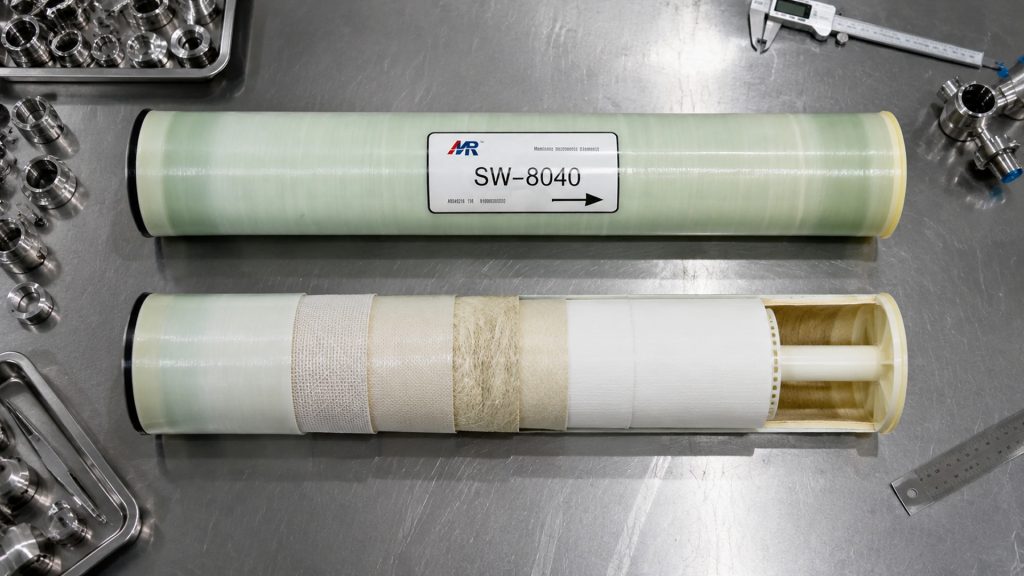
An RO membrane achieves filtration through a specially designed multi-layer structure that combines different functional layers to support effective water separation. Modern RO membranes usually consist of a protective layer, a porous support layer, and a selective separation layer. Each layer performs a specific role during operation, from protecting the membrane surface and maintaining structural strength to controlling the movement of water molecules and dissolved substances.
The multi-layer design allows an RO membrane to withstand the high-pressure environment required for reverse osmosis filtration while maintaining stable separation performance. Among these layers, the selective separation layer is the most important functional area because it determines which substances can pass through the membrane. This structure creates a balance between water permeability and contaminant rejection, enabling the membrane to produce purified water with consistent quality during continuous operation.
Main Layers of an RO Membrane Structure
| RO Membrane Layer | Main Function | Impact on Filtration Performance |
|---|---|---|
| Protective Layer | Protects membrane surface from external stress and particles | Improves membrane durability |
| Support Layer | Provides mechanical strength under pressure | Maintains structural stability |
| Selective Layer | Controls water molecule transport and contaminant rejection | Determines purification performance |
The RO Membrane Uses Multiple Layers to Achieve Filtration Performance
The filtration capability of an RO membrane depends on its carefully designed multi-layer structure, where each layer contributes to the overall performance of the membrane system. A typical RO membrane includes a protective surface layer, a porous support layer, and a thin selective separation layer. These layers work together to provide mechanical stability, support efficient water transport, and maintain effective rejection of dissolved contaminants during reverse osmosis filtration.
The combination of multiple layers allows an RO membrane to operate under high pressure without losing structural integrity or filtration efficiency. The support layers provide the strength needed to withstand operating pressure, while the selective layer controls the movement of water molecules and unwanted substances. This layered design enables the membrane to achieve reliable separation performance while maintaining long-term operational stability.
The RO Membrane Protective Layer Improves Surface Durability
The protective layer of an RO membrane helps maintain the physical durability of the membrane surface during continuous filtration. This outer layer reduces the direct impact of external factors such as water flow pressure, suspended particles, and potential surface contamination. By providing additional protection, the layer helps prevent damage to the inner membrane structure and supports stable filtration performance under different operating conditions.
A durable protective layer allows the RO membrane to maintain reliable operation throughout its service life. It reduces mechanical stress on the functional layers beneath the surface and helps minimize the risk of premature performance decline. Although the protective layer does not directly perform molecular separation, it plays an important role in preserving membrane integrity and supporting consistent water treatment results.
The RO Membrane Support Layer Provides Structural Stability
The support layer of an RO membrane provides the mechanical strength required for operation under high-pressure filtration conditions. Because reverse osmosis requires significant pressure to force water molecules through the selective layer, the support structure must maintain the shape and stability of the membrane during continuous operation. Without sufficient support, the membrane may experience deformation that affects water flow and separation performance.
Although the support layer does not directly remove contaminants, it plays an essential role in maintaining the overall function of the RO membrane. It provides a stable foundation for the selective layer and ensures that water can pass through the membrane structure efficiently. The mechanical stability provided by this layer allows the membrane to operate effectively over long periods while maintaining consistent filtration performance.
The RO Membrane Selective Layer Controls Water and Contaminant Separation
The selective separation layer is the core functional component of an RO membrane because it determines how water molecules and dissolved substances move during filtration. This extremely thin layer is designed to allow water molecules to pass through while restricting dissolved salts, minerals, and other contaminants. Its selective properties directly control the membrane’s purification capability and contaminant rejection performance.
The performance of the selective layer determines the balance between water permeability and separation efficiency. A well-designed RO membrane selective layer allows sufficient water production while maintaining effective rejection of unwanted substances. By controlling molecular transport at this stage, the membrane can provide stable purification performance and support reliable reverse osmosis operation across different water treatment applications.
The RO Membrane Uses Pressure and Conditions to Control Filtration
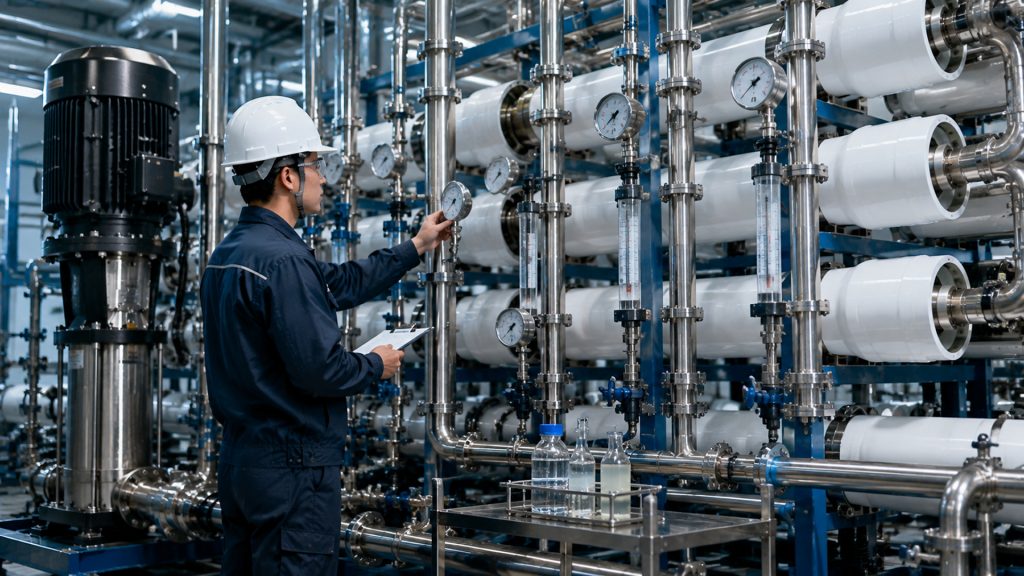
The operation of an RO membrane depends on the interaction between applied pressure, water flow, and feed water conditions during the filtration process. Pressure provides the driving force required to move water molecules through the selective membrane layer, allowing purified water to pass through while dissolved contaminants remain separated on the feed water side. Without sufficient pressure, the RO membrane cannot effectively overcome osmotic resistance, resulting in reduced water transport and lower filtration efficiency.
In addition to pressure, factors such as temperature, water composition, dissolved substance concentration, and flow conditions can influence how efficiently an RO membrane performs separation. Different feed water sources may require different treatment solutions, such as industrial RO systems, brackish water RO systems, or seawater desalination systems. Changes in these operating conditions may affect water permeability, contaminant rejection, and overall system stability. Maintaining suitable operating parameters allows the membrane to achieve consistent water transport and reliable contaminant removal during continuous reverse osmosis filtration.
The RO Membrane Controls Filtration Through Pressure and Water Flow Conditions
The filtration process of an RO membrane is controlled by the relationship between applied pressure and water flow conditions. Pressure creates the force needed to push feed water through the selective separation layer, while water flow determines how water contacts the membrane surface during filtration. A properly controlled flow condition helps maintain effective interaction between feed water and the membrane, allowing stable separation of water molecules and dissolved substances.
A suitable balance between pressure and flow allows the RO membrane to maintain stable water transport and contaminant rejection performance. If the applied pressure is insufficient, water production may decrease because fewer water molecules can pass through the membrane layer. On the other hand, unsuitable flow conditions may increase concentration polarization or contaminant accumulation near the membrane surface, which can reduce filtration efficiency over time.
The RO Membrane Uses Pressure Levels to Regulate Water Transport
The pressure applied to an RO membrane directly affects the movement of water molecules through the selective separation layer. Higher pressure increases the driving force for water transport, allowing more water molecules to overcome osmotic resistance and pass through the membrane structure. However, the pressure level must remain within suitable operating limits because excessive pressure may increase energy consumption and place additional stress on membrane components.
Proper pressure control helps the RO membrane maintain a balance between permeate production and contaminant rejection. When pressure conditions are optimized, the membrane can continuously separate purified water from dissolved substances while maintaining stable filtration performance. This makes pressure management an essential factor in achieving reliable operation and extending the effective performance of the reverse osmosis filtration process.
The RO Membrane Performance Changes with Feed Water Conditions
Feed water conditions have a significant influence on how an RO membrane performs during filtration. Factors such as temperature, dissolved substance concentration, hardness level, and water composition can affect membrane permeability and separation efficiency. Different feed water characteristics create different filtration challenges, requiring suitable operating conditions to ensure that the membrane can maintain stable water transport and contaminant rejection.
For example, changes in water temperature can influence water viscosity and affect how easily water molecules move through the membrane layer. Higher concentrations of dissolved substances may increase resistance during filtration and place additional pressure on the separation process. Understanding these feed water conditions helps engineers optimize RO membrane operation and maintain consistent purification performance under different application environments.
The RO Membrane Adjusts Filtration Performance Through Separation Conditions
The filtration efficiency of an RO membrane is influenced by the combined effect of pressure, flow rate, and feed water characteristics during the separation process. These operating conditions determine how effectively water molecules can pass through the membrane while dissolved contaminants remain rejected. When these factors are properly controlled, the RO membrane can maintain stable molecular separation and produce consistent purified water quality.
The relationship between operating conditions and membrane performance is important for designing reliable reverse osmosis systems. By evaluating pressure requirements, flow conditions, and feed water properties, engineers can optimize the filtration process and reduce factors that may affect membrane efficiency. Proper control of separation conditions allows the RO membrane to achieve predictable performance and support long-term water treatment operation.
The RO Membrane Controls Water Flow and Contaminant Rejection Balance
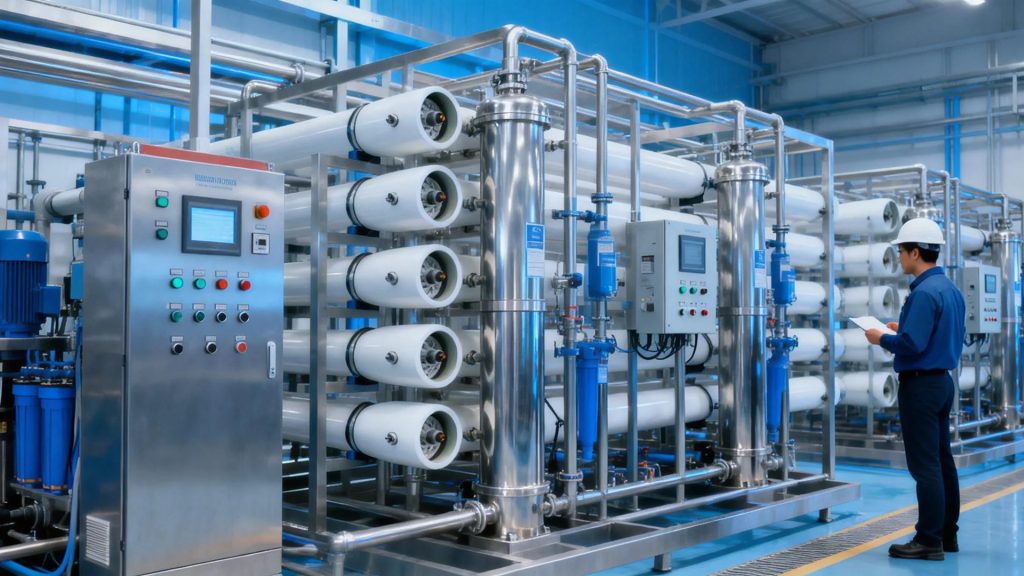
An RO membrane must maintain a balance between water production and contaminant rejection during operation to achieve stable filtration performance. Water production capacity depends on how efficiently water molecules can pass through the membrane, while contaminant rejection determines the purity of the final treated water. Increasing water flow may improve production capacity, but excessive flow conditions can accelerate contaminant accumulation on the membrane surface and increase fouling risks.
The performance balance of an RO membrane is influenced by membrane design, operating pressure, feed water characteristics, and filtration conditions. The membrane must allow sufficient water transport while preventing dissolved salts, minerals, and other unwanted substances from passing through. Maintaining this balance enables the RO membrane to provide consistent water quality, improve operational reliability, and support long-term reverse osmosis filtration performance.
The RO Membrane Determines Filtration Performance Through Water Flux Control
Water flux is an important parameter for evaluating RO membrane performance because it represents the amount of purified water produced through a specific membrane area over a certain period. A suitable flux level allows the membrane to achieve efficient water production while maintaining stable separation performance. The relationship between water transport and contaminant rejection directly affects the overall efficiency of the reverse osmosis filtration process.
If the water flux of an RO membrane is too high, contaminants may accumulate more quickly on the membrane surface, increasing concentration polarization and fouling risks. On the other hand, insufficient flux may reduce system productivity and limit water output. By controlling flux according to membrane characteristics, feed water quality, and operating requirements, the RO membrane can maintain reliable filtration efficiency and stable long-term operation.
The RO Membrane Maintains Suitable Flux Under Different Operating Conditions
The ideal flux of an RO membrane depends on multiple operating factors, including feed water quality, applied pressure, temperature, membrane properties, and system design. Different water treatment applications require different flux levels because the balance between production capacity and filtration stability may vary depending on the feed water conditions. Selecting an appropriate flux helps the membrane operate efficiently without excessive stress.
Proper flux control prevents unnecessary pressure on the membrane surface and reduces the possibility of rapid fouling or performance decline. When the RO membrane operates under suitable flux conditions, it can maintain consistent water output while preserving contaminant rejection capability. This helps reduce maintenance frequency, extend membrane service life, and improve the overall reliability of reverse osmosis systems.
The RO Membrane Achieves Purification Efficiency Through Selective Rejection
The rejection performance of an RO membrane determines how effectively dissolved salts, minerals, and other impurities are removed from feed water during filtration. While water molecules are transported through the membrane separation layer to form purified water, unwanted substances are retained on the concentrated water side. This selective rejection process is the key function that enables reverse osmosis technology to achieve high purification efficiency.
A high-quality RO membrane must maintain sufficient water permeability without reducing its ability to reject dissolved contaminants. If the membrane allows too many unwanted substances to pass through, water quality may decrease; however, excessive restriction of water transport can reduce production efficiency. The balance between permeability and selectivity allows the RO membrane to produce purified water efficiently while maintaining stable filtration performance.
The RO Membrane Structure Supports Stable Rejection Performance
The structure and material properties of an RO membrane directly influence its ability to separate water molecules from dissolved contaminants. The selective layer controls molecular movement by allowing water molecules to pass through while restricting salts, minerals, and other impurities. Meanwhile, the supporting layers provide mechanical strength and help maintain membrane stability under continuous operating pressure.
A properly designed membrane structure enables the RO membrane to maintain stable rejection performance under different filtration conditions. The interaction between membrane materials, selective properties, and operating environment determines how effectively contaminants can be removed. By maintaining reliable separation capability, the RO membrane can continuously produce consistent purified water quality and support efficient reverse osmosis operation.
The RO Membrane Transports Water Through the Polyamide Separation Layer
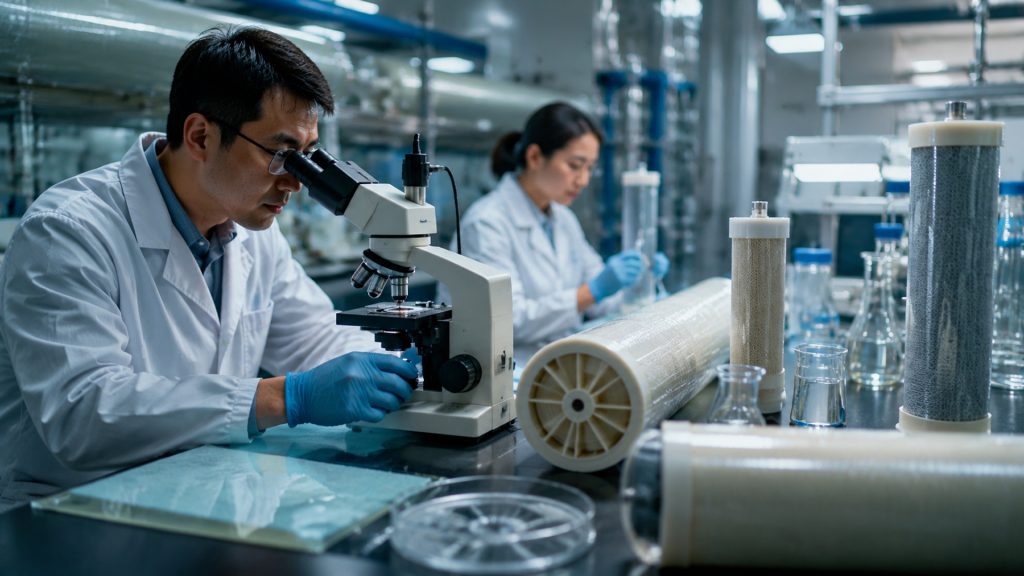
The water transport process of an RO membrane mainly occurs through the thin polyamide separation layer, which is the functional area responsible for molecular separation. This dense layer allows water molecules to pass through under applied pressure while restricting dissolved salts, minerals, and other contaminants. The structure and properties of the polyamide layer directly influence the membrane’s permeability and rejection performance, determining how efficiently the RO membrane can separate purified water from concentrated substances.
During filtration, pressurized feed water reaches the surface of the RO membrane, and water molecules enter the selective layer before moving through the membrane structure. At the same time, dissolved ions and unwanted substances experience stronger resistance and remain on the feed water side. This solution-diffusion mechanism enables the RO membrane to achieve separation at a molecular level and maintain stable purification performance during continuous operation.
The RO Membrane Uses the Solution-Diffusion Mechanism for Water Transport
The solution-diffusion mechanism explains how water molecules move across an RO membrane during the reverse osmosis process. Unlike conventional filtration methods that rely mainly on physical pore size separation, RO membranes control molecular movement through the interaction between membrane materials and dissolved substances. Water molecules first dissolve into the polyamide layer and then diffuse through the selective structure under pressure.
During this process, dissolved salts and other contaminants face greater resistance because of their molecular characteristics and interaction with the membrane material. This allows the RO membrane to achieve high rejection performance while maintaining sufficient water transport. The solution-diffusion mechanism is a key reason why reverse osmosis can remove dissolved substances that cannot be effectively removed by traditional filtration methods.
The RO Membrane Selective Layer Controls Molecular Movement During Filtration
The selective layer of an RO membrane plays a critical role in controlling the movement of water molecules and dissolved substances during filtration. This extremely thin polyamide layer is designed to provide a balance between water permeability and contaminant rejection. Water molecules can pass through the layer more easily, while dissolved salts, minerals, and other impurities are restricted.
The performance of this selective layer directly affects the overall efficiency of the RO membrane. A well-designed structure allows the membrane to produce purified water with stable quality while maintaining effective contaminant removal. By controlling molecular transport at the selective layer, the RO membrane achieves reliable separation performance throughout the filtration process.
The RO Membrane Generates Permeate and Concentrate Streams During Filtration
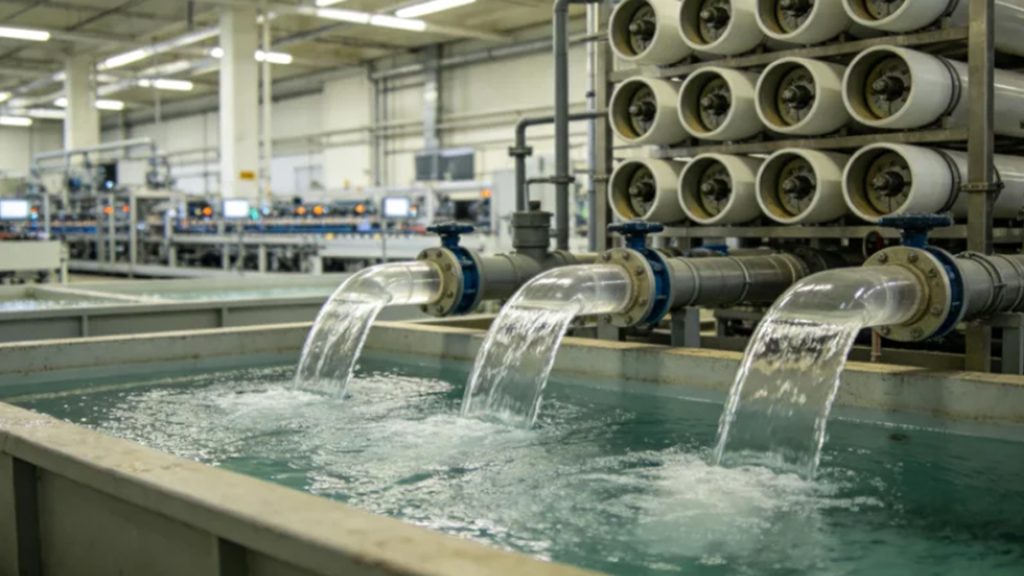
During the reverse osmosis process, an RO membrane separates feed water into two different streams: permeate water and concentrate water. The permeate stream contains water molecules that successfully pass through the membrane separation layer, while the concentrate stream contains a higher concentration of rejected salts, minerals, and other contaminants. This separation process is an essential part of how an RO membrane operates.
The continuous formation of permeate and concentrate streams allows the RO membrane to maintain stable filtration conditions. By removing concentrated contaminants from the membrane surface through concentrate flow, the system reduces the impact of accumulation and supports consistent water transport. The balance between permeate production and concentrate discharge also influences the efficiency and recovery performance of the reverse osmosis system.
The RO Membrane Produces Purified Water Through Permeate Formation
Permeate formation occurs when water molecules pass through the selective layer of an RO membrane and enter the purified water stream. The amount and quality of permeate produced depend on several factors, including membrane characteristics, applied pressure, feed water composition, and operating conditions. A properly functioning RO membrane allows efficient water transport while maintaining strong rejection of dissolved contaminants.
The ability to produce stable permeate demonstrates the separation performance of an RO membrane. By controlling the movement of water molecules and preventing unwanted substances from passing through, the membrane helps ensure consistent purified water quality. This process enables reverse osmosis systems to provide reliable filtration performance for different water treatment applications.
The RO Membrane Removes Rejected Substances Through Concentrate Flow
The concentrate flow carries away substances that are rejected by the RO membrane during filtration. When dissolved salts, minerals, and other contaminants cannot pass through the selective layer, they remain in the feed side and become more concentrated. The continuous movement of concentrate water helps prevent excessive accumulation near the membrane surface.
Effective concentrate management is important for maintaining stable RO membrane operation. By balancing concentrate discharge with permeate production, the system can preserve suitable filtration conditions and reduce the negative effects of contaminant buildup. This process allows the RO membrane to maintain consistent separation performance during long-term operation. In complete water treatment systems, proper integration of membrane components, pressure control, and monitoring equipment helps improve overall filtration reliability.