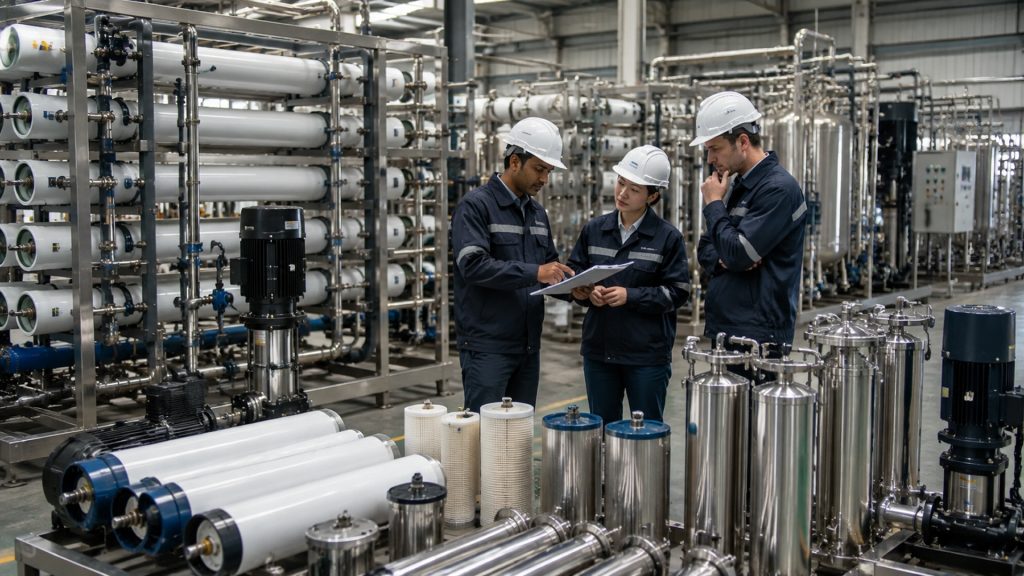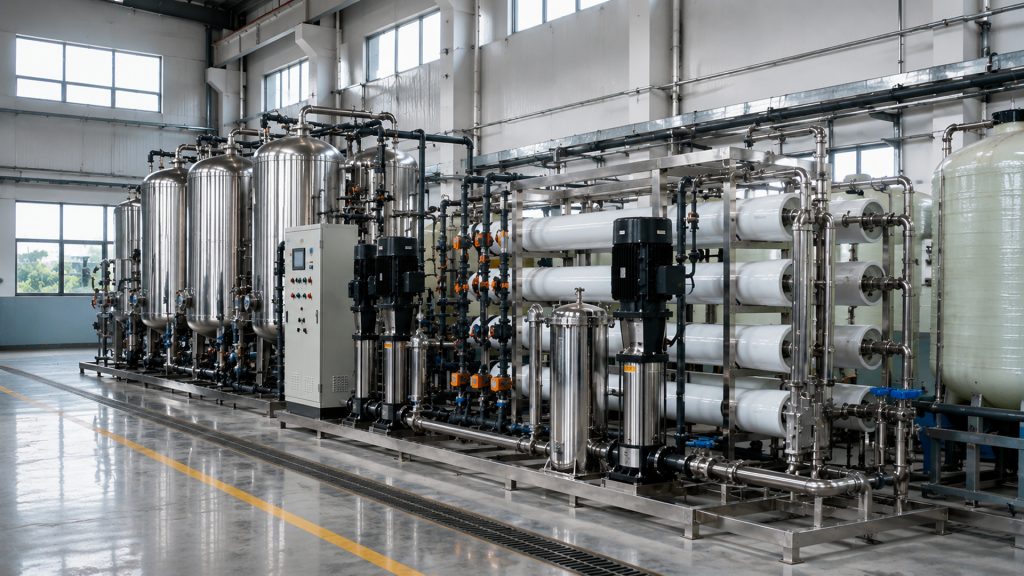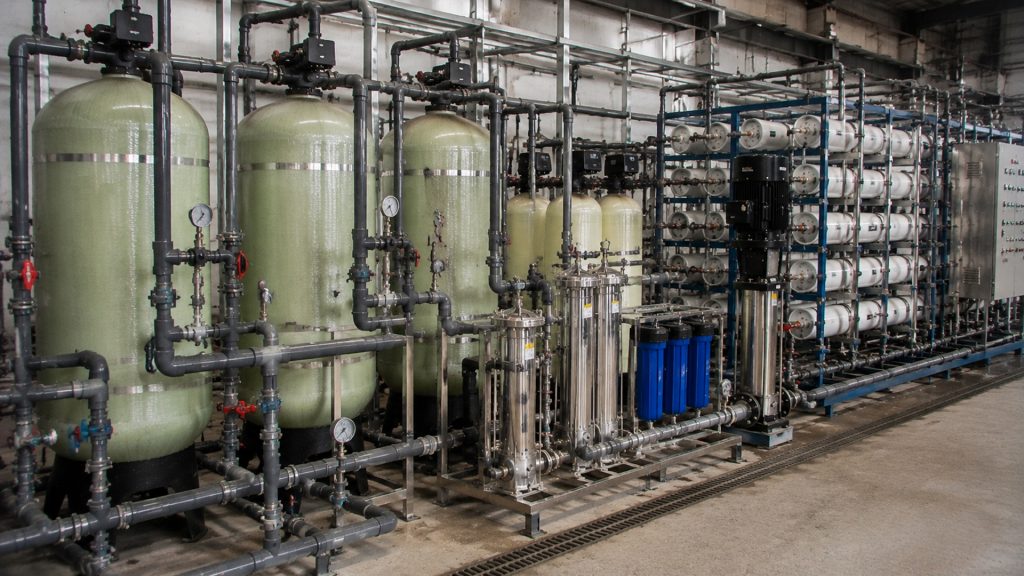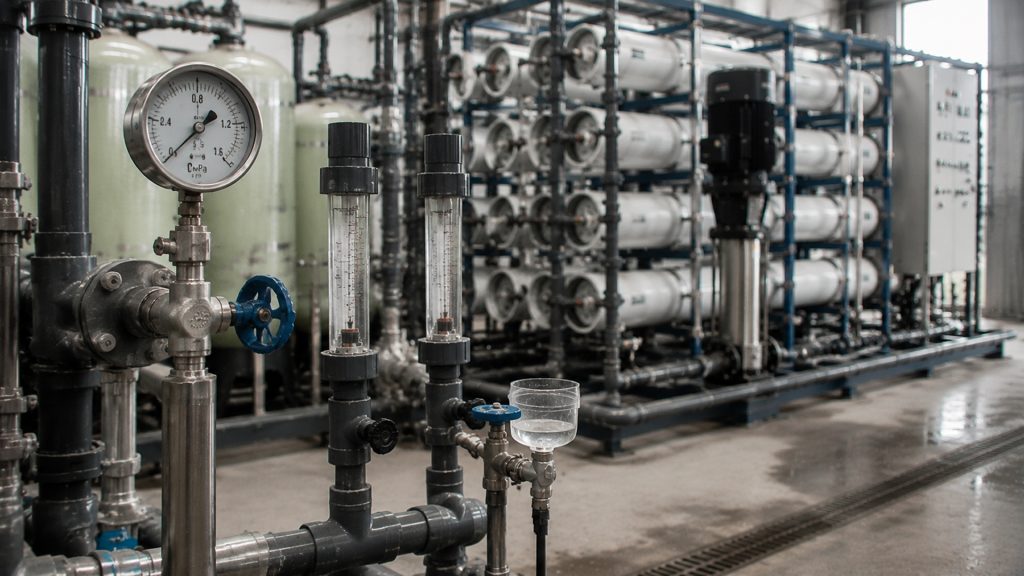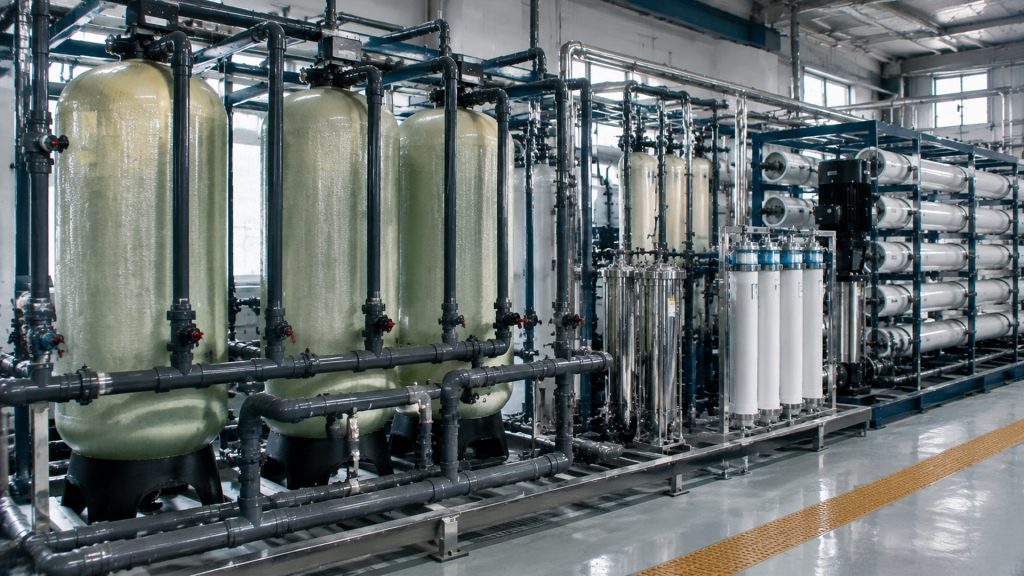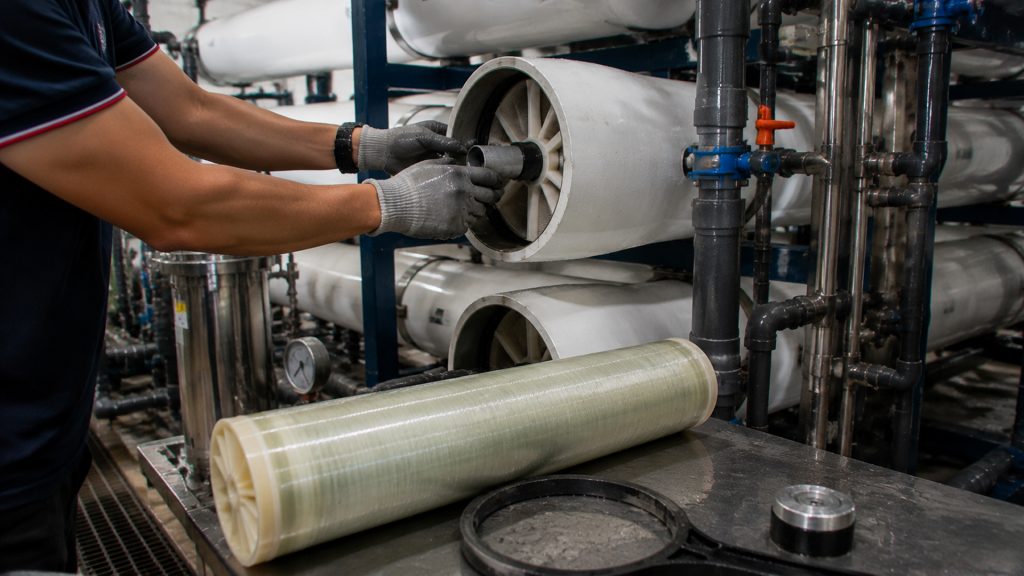





RO water filtration is a membrane-based purification technology that removes dissolved salts, contaminants, and impurities from water through reverse osmosis. Unlike traditional filtration methods that mainly capture suspended particles, RO filtration uses pressure and a semi-permeable membrane to separate water molecules from unwanted substances. This process allows the system to produce purified water with consistent quality for different treatment applications.
Understanding how RO water filtration works helps engineers and buyers evaluate system performance, membrane technology, and operating requirements. From feed water preparation to membrane separation, each stage affects filtration efficiency and final water quality. A clear understanding of the working process allows users to select suitable solutions and improve long-term water treatment results.
The Basic Working Principle of RO Water Filtration
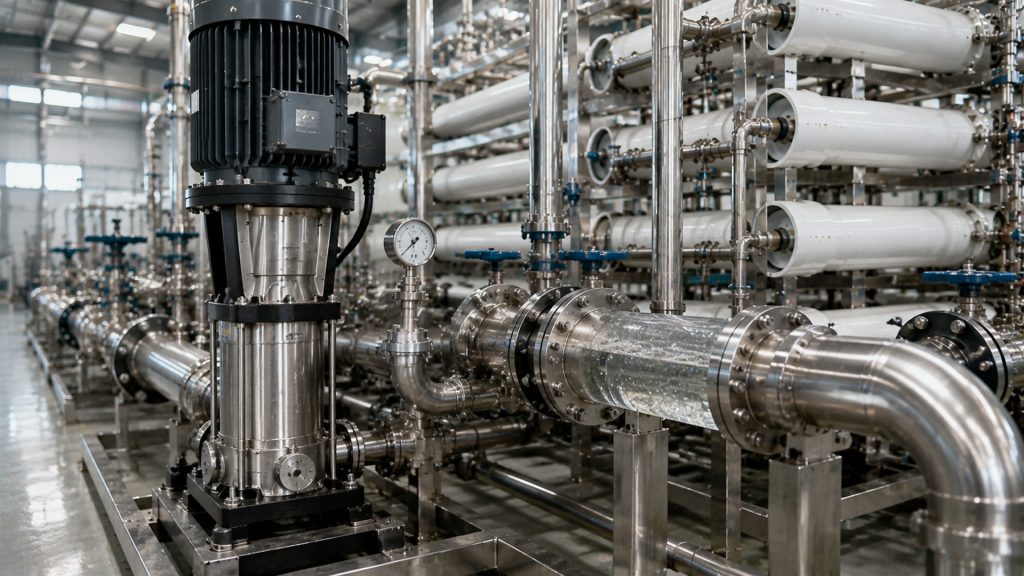
RO water filtration works through a process called reverse osmosis, which uses pressure to force water through a specially designed membrane. Under normal conditions, water naturally moves from an area with lower dissolved substance concentration to an area with higher concentration through osmosis. Reverse osmosis reverses this process by applying external pressure, allowing purified water to move through the membrane while contaminants remain separated.
The semi-permeable RO membrane is designed with extremely small pores that only allow water molecules to pass through. Dissolved salts, minerals, heavy metals, and other unwanted substances are blocked because of their larger molecular size. This separation process enables RO water filtration systems to achieve high purification performance compared with many conventional filtration technologies.
The efficiency of this process depends on several conditions, including feed water quality, operating pressure, membrane characteristics, and system design. Proper control of these factors ensures stable water production and helps maintain consistent filtration performance during continuous operation.
Key Elements Involved in RO Water Filtration Process
| Component | Function in RO Water Filtration | Impact on System Performance |
|---|---|---|
| مياه التغذية | Provides the source water containing dissolved substances and impurities | Determines pretreatment requirements and filtration difficulty |
| High-Pressure Pump | Provides the pressure required to push water through the RO membrane | Directly affects filtration efficiency and water production capacity |
| غشاء التناضح العكسي | Separates purified water from dissolved contaminants through selective filtration | Determines contaminant rejection rate and water quality |
| Purified Water Stream | Collects treated water after membrane separation | Represents the final water quality output |
| Concentrated Water Stream | Removes rejected contaminants from the system | Influences recovery rate and wastewater management |
RO Water Filtration Uses Pressure to Drive Membrane Separation
RO water filtration relies on pressure-driven membrane separation to produce purified water from contaminated sources. During operation, feed water is pressurized and pushed toward the RO membrane surface, where the separation process begins. The applied pressure allows water molecules to pass through the membrane while preventing many dissolved substances from moving through. This pressure-based process is the foundation of reverse osmosis technology and determines the overall filtration efficiency of an RO system.
External Pressure Enables Effective Water Molecule Movement
The application of external pressure is an essential part of RO water filtration because it overcomes the natural osmotic pressure between different water concentrations. Without sufficient pressure, water molecules cannot effectively pass through the semi-permeable membrane. By maintaining suitable operating pressure, RO systems can improve water production capacity and achieve stable purification performance. Proper pressure control also helps reduce unnecessary energy consumption and protects system components from excessive stress.
The Semi-Permeable Membrane Controls the RO Filtration Process
The semi-permeable membrane is the core element that controls separation during RO water filtration. Its specially designed structure contains extremely small pores that allow water molecules to pass while rejecting dissolved salts, minerals, and other contaminants. The membrane’s material properties and surface condition directly affect filtration efficiency, water quality, and system reliability. Selecting suitable membrane technology helps maintain consistent performance under different water treatment conditions.
RO Water Filtration Separates Purified Water from Dissolved Contaminants
RO water filtration achieves purification by separating clean water from concentrated contaminants during the membrane filtration stage. When feed water enters the RO membrane, water molecules move through the membrane layer and become purified water, while dissolved substances remain in the concentrated stream. This separation mechanism allows RO systems to remove various impurities that cannot be effectively reduced by traditional filtration methods.
Dissolved Salts and Impurities Are Removed Through Membrane Rejection
During the RO water filtration process, dissolved salts, heavy metals, minerals, and other unwanted substances are rejected by the membrane barrier. These contaminants are prevented from entering the purified water stream because their molecular size and characteristics limit their ability to pass through the membrane. Effective contaminant rejection helps RO systems provide reliable water quality for industrial, municipal, and commercial treatment applications.
How RO Membranes Perform Water Separation During Filtration
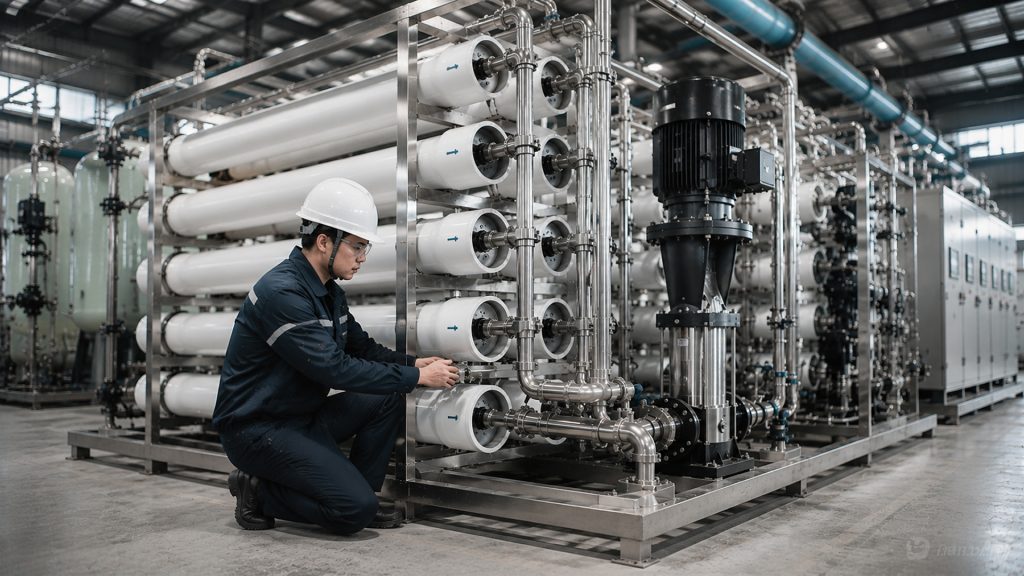
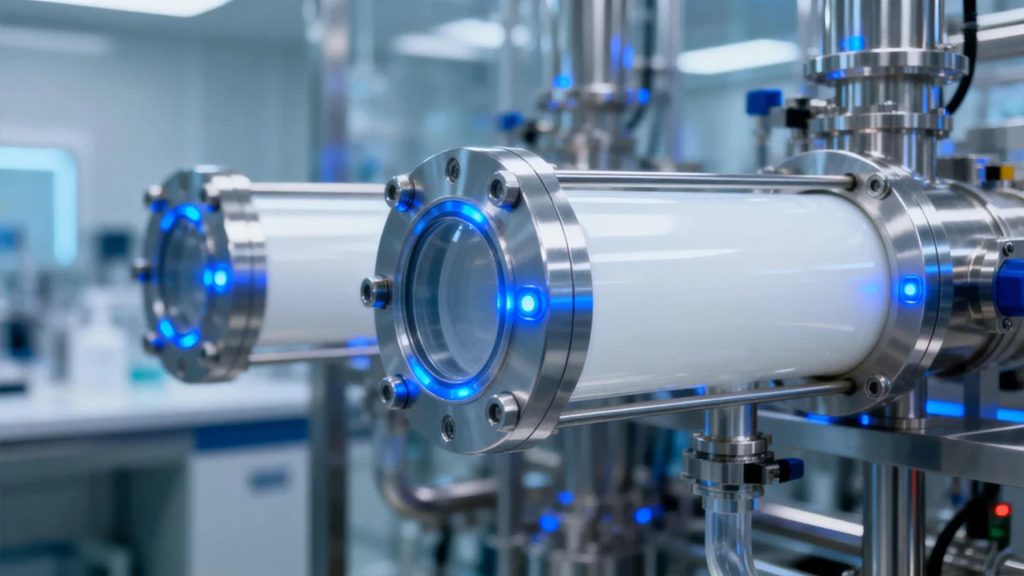
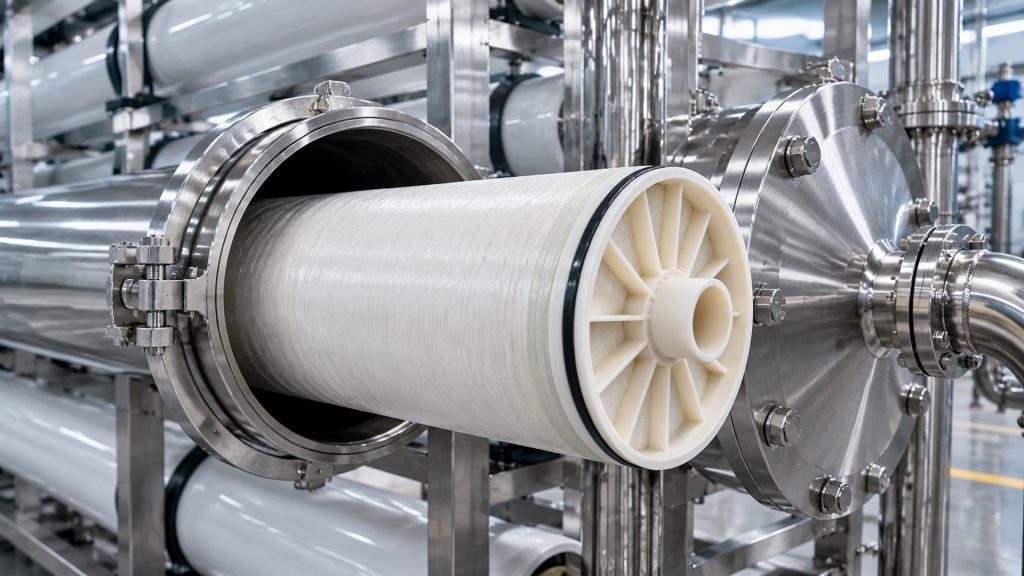
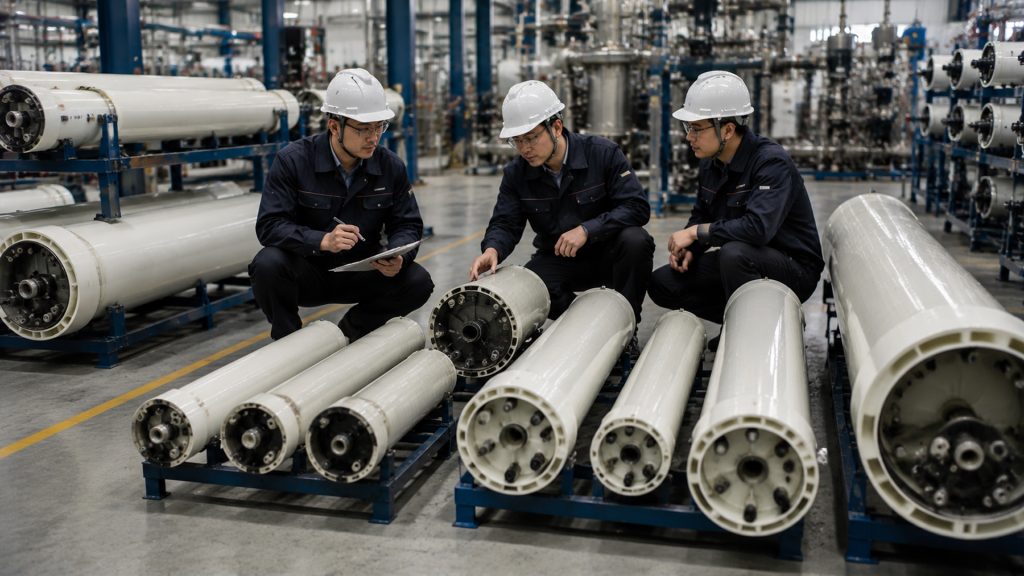
The RO membrane is the most important component in the RO water filtration process because it determines how effectively contaminants can be removed. The membrane surface contains a selective barrier that allows water molecules to pass while rejecting dissolved substances. This selective separation capability is the reason reverse osmosis can produce high-quality purified water from different water sources.
During operation, pressurized feed water enters the membrane module and flows across the membrane surface. A portion of the water passes through the membrane as purified water, while the remaining concentrated water contains higher levels of rejected contaminants. This continuous separation process allows the system to remove unwanted substances while maintaining stable water output.
Membrane performance can be affected by fouling, scaling, temperature changes, and improper operating conditions. Therefore, selecting suitable membrane materials and maintaining proper operating parameters are important for ensuring reliable RO water filtration performance and extending membrane service life.
RO Membranes Enable Selective Separation in RO Water Filtration Systems
The RO membrane is the key filtration component that determines the separation efficiency of an RO water filtration system. Unlike ordinary filters that mainly remove visible particles, RO membranes use a selective barrier structure to separate water molecules from dissolved substances. This special membrane layer allows purified water to pass through while preventing salts, minerals, and other contaminants from entering the treated water stream.
The Selective Membrane Barrier Controls Water Purification Performance
The selective barrier of an RO membrane plays a critical role in controlling the quality of purified water. During RO water filtration, the membrane structure allows smaller water molecules to move through while rejecting larger dissolved substances. The effectiveness of this separation depends on membrane material, pore structure, and operating conditions. A properly selected membrane helps maintain stable filtration efficiency and consistent water quality.
Water Molecules Pass Through While Contaminants Remain Separated
During the membrane separation process, water molecules can pass through the RO membrane because of their small molecular size, while dissolved salts, heavy metals, and other impurities are retained. This separation mechanism enables RO water filtration systems to achieve high contaminant removal performance. By controlling the movement of water and rejected substances, the membrane helps produce reliable purified water for different applications.
RO Water Filtration Performance Depends on Membrane Operation Conditions
The performance of an RO membrane is not only determined by its material structure but also by actual operating conditions. During operation, pressurized feed water flows through the membrane module, where part of the water becomes purified water and the remaining concentrated stream carries rejected contaminants away. Stable pressure, suitable temperature, and proper flow conditions are important for maintaining effective membrane separation.
Feed Water Conditions Influence RO Membrane Separation Efficiency
Feed water quality has a direct impact on RO water filtration performance. High levels of suspended solids, hardness, organic matter, or dissolved contaminants may increase fouling and scaling risks on the membrane surface. These problems can reduce water production and increase operating pressure requirements. Evaluating feed water characteristics before system operation helps improve membrane protection and maintain stable filtration performance.
Proper Membrane Management Extends RO Filtration Service Life
Regular monitoring and proper operating control are essential for extending RO membrane lifespan. Factors such as pressure changes, temperature fluctuations, and contaminant accumulation can affect membrane performance over time. By maintaining suitable operating conditions and applying appropriate cleaning strategies, users can reduce membrane degradation, improve RO water filtration reliability, and achieve longer equipment service life.
The Complete Filtration Process of an RO Water Filtration System
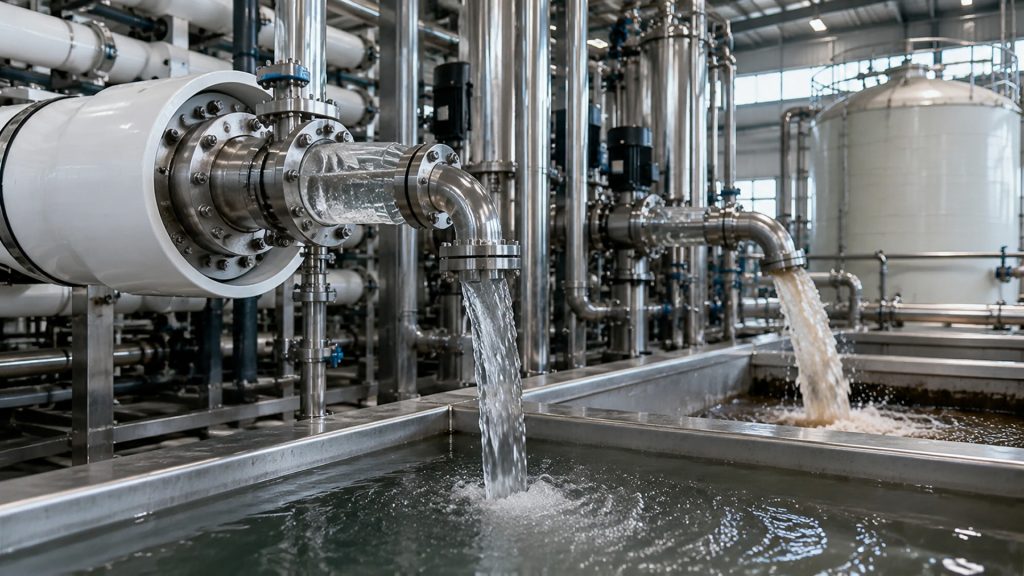
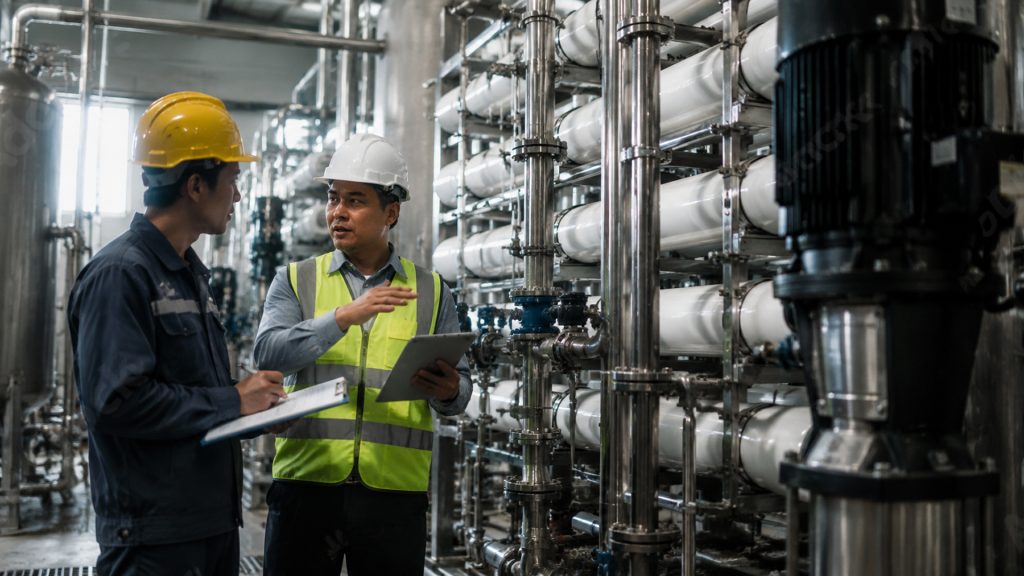
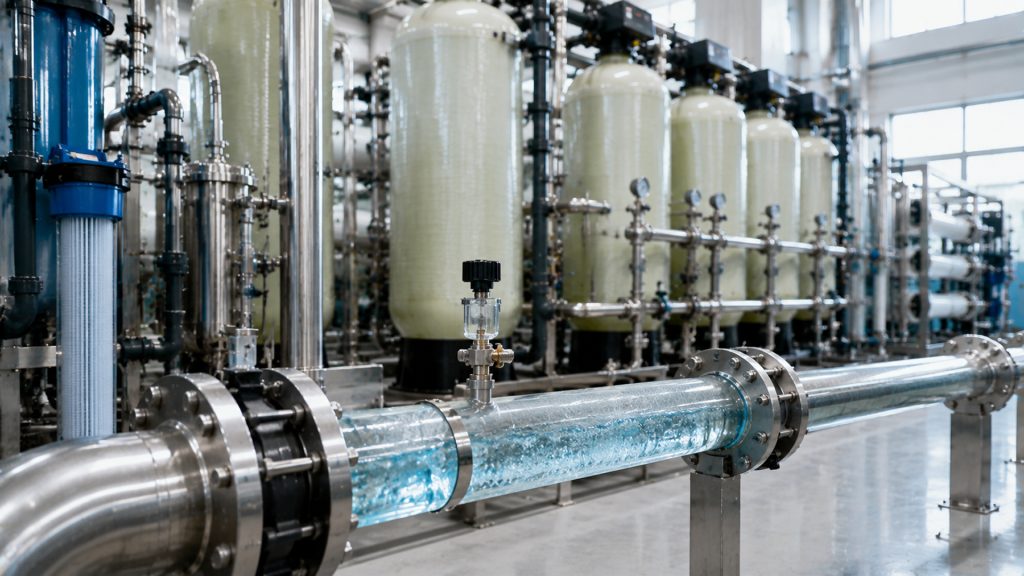
A complete RO water filtration system involves several stages that work together to achieve effective purification. Before water reaches the RO membrane, pretreatment processes are usually applied to remove larger particles, chlorine, hardness, and other substances that may affect membrane performance. This preparation stage helps reduce fouling risks and protects the membrane from damage.
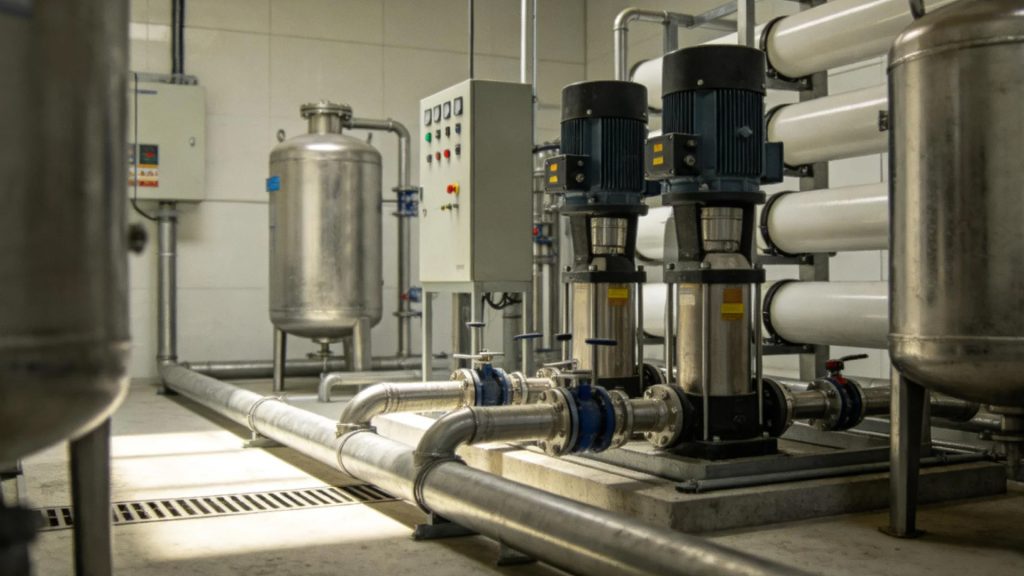
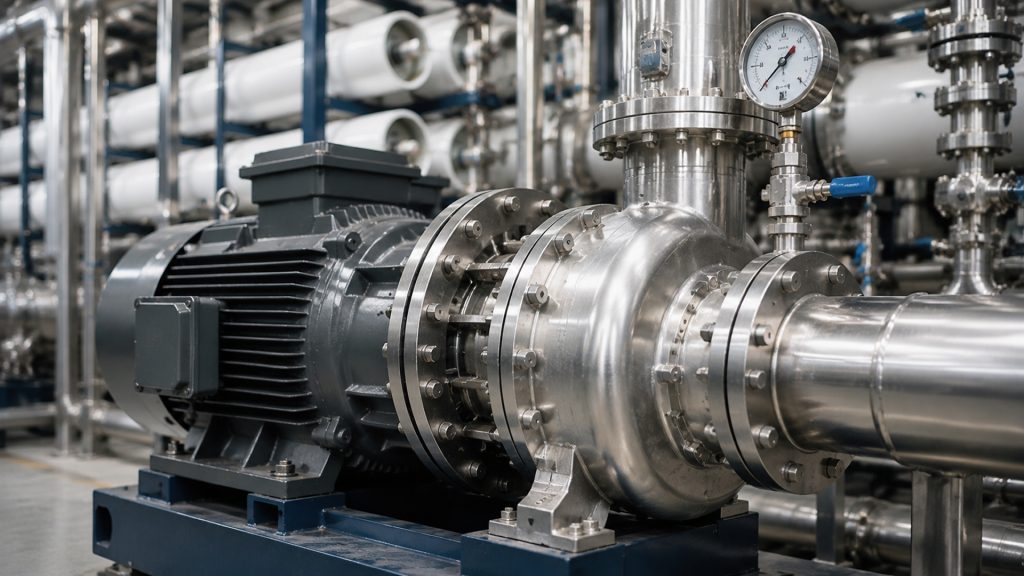
After pretreatment, a high-pressure pump increases the pressure of feed water so that it can pass through the RO membrane. Pressure is a key factor because reverse osmosis requires sufficient force to overcome natural osmotic pressure. The pump must provide stable pressure to maintain filtration efficiency and ensure consistent water production.
During the final stage, purified water is collected as permeate, while concentrated water containing rejected contaminants is discharged. The balance between purified water output and wastewater flow affects system recovery rate and operating efficiency. Proper system configuration allows RO water filtration equipment to achieve reliable performance for long-term applications.
Pretreatment Prepares Feed Water for RO Water Filtration
Pretreatment is the first stage of the RO water filtration process and plays an important role in protecting the RO membrane. Before water enters the membrane unit, suspended solids, chlorine, hardness, and organic substances need to be reduced to prevent fouling and scaling problems. Proper pretreatment improves feed water quality and creates more suitable operating conditions for the membrane separation stage.
Different water sources may require different pretreatment methods depending on their chemical characteristics and contamination levels. Sediment filtration, activated carbon filtration, and softening processes are commonly used to protect the membrane and improve system stability. Effective pretreatment helps maintain consistent filtration performance and extends the service life of the RO water filtration system.
Pretreatment Reduces Contaminant Risks Before Membrane Filtration
Before the RO membrane performs the main separation process, pretreatment removes substances that may negatively affect membrane operation. Suspended particles can block membrane surfaces, while chlorine and hardness minerals may cause membrane damage or scaling. By reducing these risks in advance, pretreatment allows the RO water filtration system to operate more efficiently and maintain stable water quality.
High-Pressure Operation Drives the RO Membrane Filtration Process
After pretreatment, feed water enters the high-pressure stage where pressure is increased to support reverse osmosis separation. The high-pressure pump provides the driving force required for water molecules to pass through the RO membrane. Without sufficient pressure, the membrane cannot effectively overcome natural osmotic pressure, resulting in lower filtration efficiency and reduced purified water production.
During this stage of RO water filtration, the membrane separates water molecules from dissolved contaminants. Purified water passes through the membrane as permeate, while concentrated water containing rejected substances remains on the other side. Stable pressure control helps maintain consistent membrane performance and improves overall system efficiency.
Stable Pressure Control Improves RO Filtration Efficiency
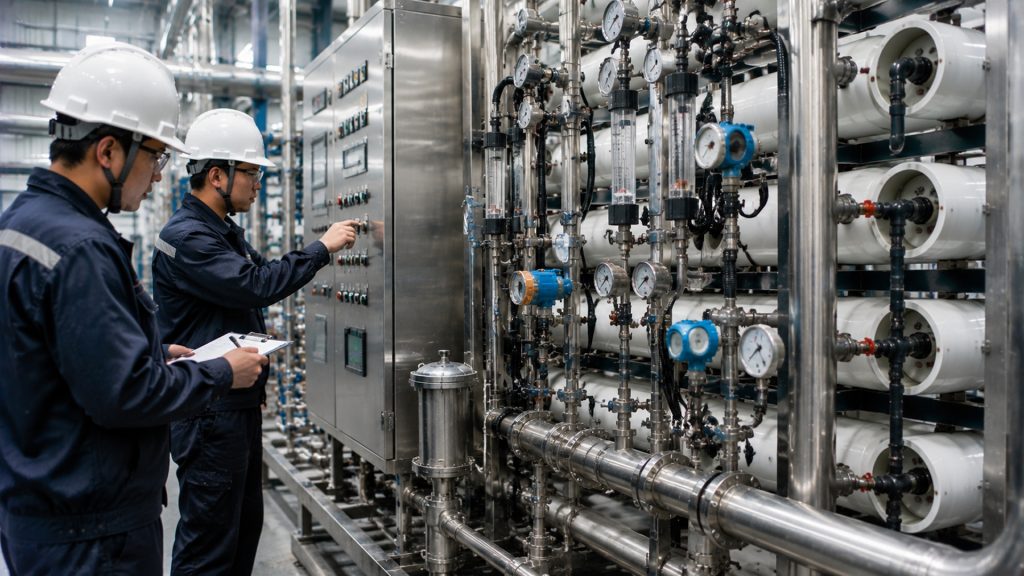
Operating pressure directly influences the performance of an RO water filtration system. Suitable pressure levels allow water to pass through the membrane effectively while maintaining proper energy efficiency. Excessive or insufficient pressure may reduce system performance, increase operating costs, or accelerate membrane wear. Therefore, accurate pressure management is essential for reliable long-term operation.
RO Water Filtration Produces Purified Water Through Final Separation
The final stage of the RO water filtration process involves collecting purified water and managing concentrated water discharge. After passing through the RO membrane, treated water with reduced contaminant levels becomes the product stream, while rejected substances remain in the concentrated water flow. This separation allows the system to continuously produce purified water while removing unwanted components.
The balance between permeate production and concentrate discharge affects system recovery rate and operating efficiency. Proper system configuration helps optimize water utilization, reduce unnecessary wastewater generation, and maintain stable performance. By controlling these factors, RO water filtration equipment can provide reliable purification results for industrial and commercial applications.
Recovery Rate Determines RO Water Filtration System Efficiency
Recovery rate is an important parameter for evaluating how effectively an RO water filtration system converts feed water into purified water. A properly optimized recovery rate improves water utilization while reducing operational problems such as scaling and membrane fouling. Maintaining the right balance between product water output and concentrate flow helps achieve efficient and sustainable system performance.
How RO Water Filtration Removes Different Types of Contaminants
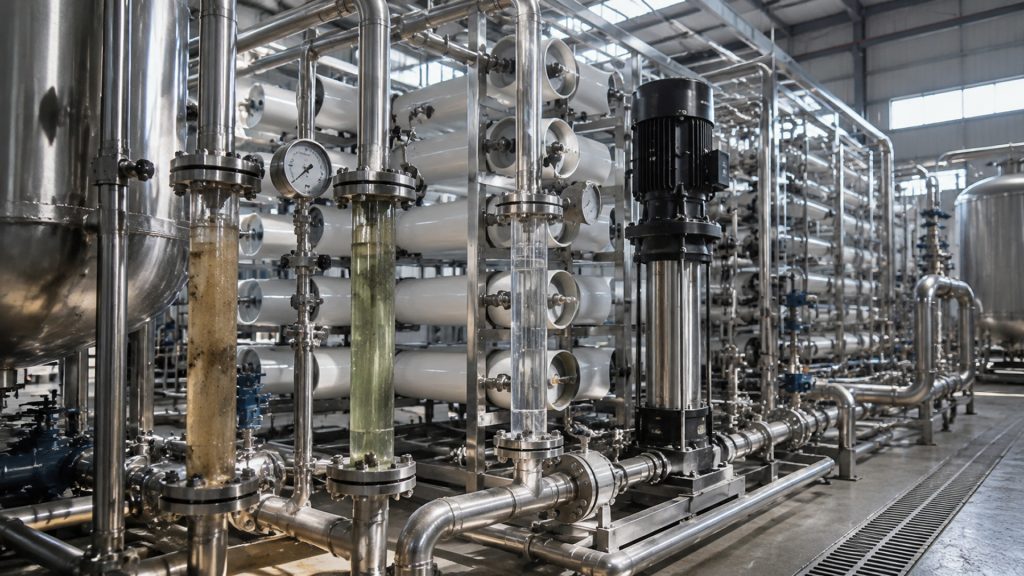
One of the main advantages of RO water filtration is its ability to reduce a wide range of dissolved contaminants. Unlike simple physical filtration methods, reverse osmosis can remove substances that are too small to be captured by conventional filters. This includes dissolved salts, minerals, heavy metals, and many other impurities that affect water quality.
The removal process depends on membrane rejection characteristics and contaminant properties. Dissolved salts and minerals are separated because they cannot easily pass through the membrane structure, while larger particles are usually removed during pretreatment. Combining different treatment stages improves overall purification efficiency and protects the RO membrane.
The effectiveness of RO water filtration also depends on feed water conditions and system operation. Water with high levels of hardness, organic matter, or suspended solids may require additional treatment before membrane filtration. Proper system design ensures that different contaminants can be controlled effectively while maintaining stable water quality.
Contaminants Removed by RO Water Filtration
| Contaminant Type | Examples | How RO Water Filtration Handles It |
|---|---|---|
| Dissolved Salts | Sodium, chloride, calcium salts | Rejected by RO membrane due to molecular size and charge characteristics |
| Heavy Metals | Lead, arsenic, mercury | Reduced through membrane separation and rejection process |
| Minerals | Calcium, magnesium, dissolved minerals | Controlled to improve water quality and reduce hardness |
| Organic Compounds | Organic substances and chemical residues | Reduced through membrane filtration combined with pretreatment |
| Suspended Solids | Sand, particles, sediments | Removed mainly through pretreatment before membrane filtration |
RO Water Filtration Removes Dissolved Contaminants Through Membrane Rejection
RO water filtration removes contaminants through a selective membrane separation process that prevents many dissolved substances from entering the purified water stream. Unlike conventional filtration methods that mainly capture larger particles, reverse osmosis can reduce contaminants at a much smaller molecular level. This ability allows RO systems to treat water containing dissolved salts, minerals, and other substances that affect water quality.
The membrane rejection process depends on the structure and performance of the RO membrane. When pressurized water passes through the membrane, water molecules can move through the selective layer while many dissolved contaminants are retained. This separation mechanism enables RO water filtration systems to produce consistent purified water for different treatment applications.
Dissolved Salts and Minerals Are Reduced Through RO Membrane Separation
Dissolved salts and minerals are among the main contaminants removed during RO water filtration. These substances are difficult to eliminate through traditional filtration because of their small molecular size. The RO membrane creates a selective barrier that blocks many dissolved ions while allowing water molecules to pass through. This process helps reduce total dissolved solids and improves overall water quality.
RO Water Filtration Controls Heavy Metals and Other Harmful Impurities
In addition to dissolved salts, RO water filtration can reduce various unwanted substances such as heavy metals and chemical impurities. Contaminants including lead, arsenic, and other dissolved compounds may affect water safety and industrial processes if they remain untreated. Through membrane rejection, RO systems help separate these substances from the purified water stream.
The effectiveness of contaminant removal depends on membrane characteristics, feed water conditions, and system operation. Properly designed RO water filtration equipment combines membrane technology with suitable pretreatment methods to improve removal efficiency and maintain stable purification performance.
RO Membranes Provide Effective Removal of Microscopic Water Impurities
The small structure of RO membranes allows them to remove many microscopic impurities that cannot be captured by standard filtration systems. During operation, unwanted substances are concentrated on the feed water side while purified water passes through the membrane. This advanced separation capability makes RO water filtration suitable for applications requiring higher water quality standards.
Feed Water Conditions Influence RO Water Filtration Contaminant Removal Performance
The removal efficiency of RO water filtration is affected by the characteristics of the incoming water. Different water sources may contain different levels of hardness, organic matter, suspended solids, and dissolved contaminants. These factors can influence membrane performance and determine whether additional treatment processes are required before reverse osmosis.
Proper feed water analysis helps engineers select suitable pretreatment methods and optimize system operation. By controlling potential fouling substances before membrane filtration, RO systems can maintain stable contaminant removal performance and extend membrane service life. A well-designed treatment process ensures reliable water quality under different operating conditions.
Pretreatment Improves Contaminant Removal Stability Before RO Filtration
Pretreatment plays an important role in improving the stability of RO water filtration by reducing substances that may interfere with membrane operation. Suspended solids, chlorine, and hardness minerals can increase fouling and scaling risks if they enter the membrane stage directly. Removing these contaminants beforehand helps protect the RO membrane and maintain consistent filtration efficiency.
Proper System Design Supports Reliable RO Water Filtration Performance
Effective contaminant removal requires more than selecting a high-quality membrane. System design, operating pressure, pretreatment configuration, and maintenance practices all influence RO water filtration results. A properly designed system ensures that different types of contaminants are controlled effectively while maintaining stable purified water production and long-term operational reliability.
Feed Water Quality Determines RO Water Filtration Performance
The quality of feed water is one of the most important factors affecting RO water filtration efficiency. Different water sources may contain different levels of suspended solids, hardness, organic matter, and dissolved contaminants. When these substances are not properly controlled, they may accumulate on the RO membrane surface and reduce filtration performance.
Poor feed water conditions can increase fouling and scaling risks, causing lower water production and higher operating costs. Before operating an RO system, analyzing water characteristics helps determine suitable pretreatment requirements and operating conditions. Proper feed water management allows RO water filtration systems to maintain stable performance and extend membrane service life.
Contaminant Levels Affect RO Membrane Fouling and Scaling Risks
The concentration of contaminants in feed water directly influences membrane operating conditions. High levels of suspended particles, minerals, and organic substances may create deposits on the membrane surface and restrict water flow. These problems can reduce RO water filtration efficiency and increase the frequency of cleaning requirements. Effective pretreatment and water quality control help minimize these risks.
Applications of RO Water Filtration in Modern Water Treatment
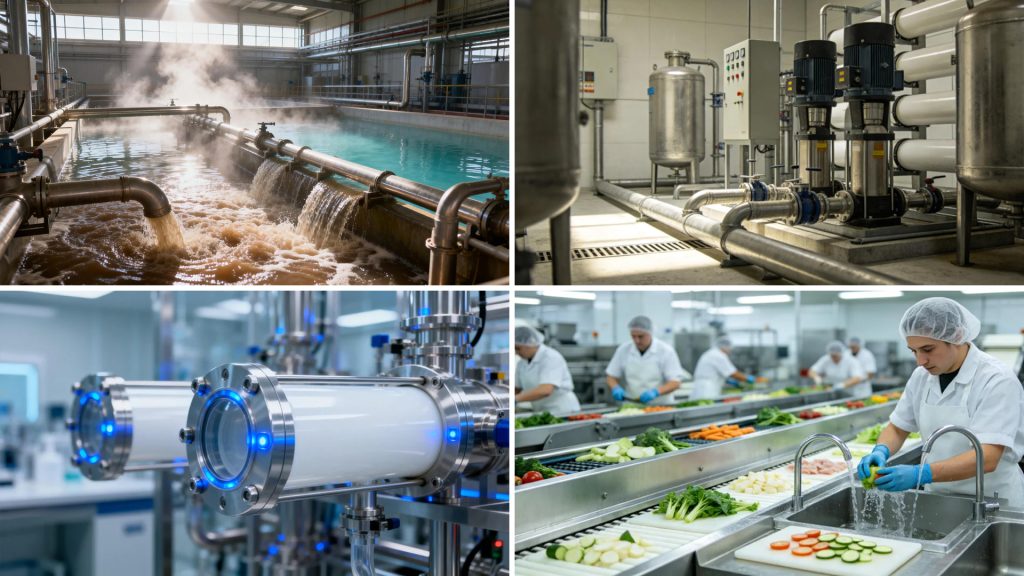
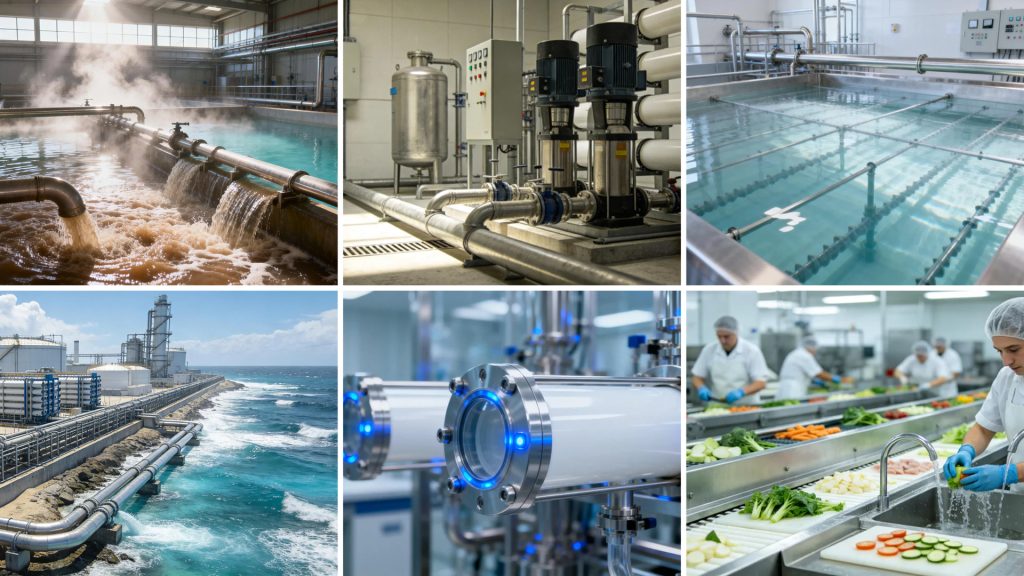
RO water filtration is widely used in industrial, municipal, and commercial water treatment because of its reliable purification capability. Industries such as manufacturing, electronics, pharmaceuticals, and food processing often require consistent water quality to support production processes. RO systems provide an effective method for reducing dissolved contaminants and meeting specific water requirements.
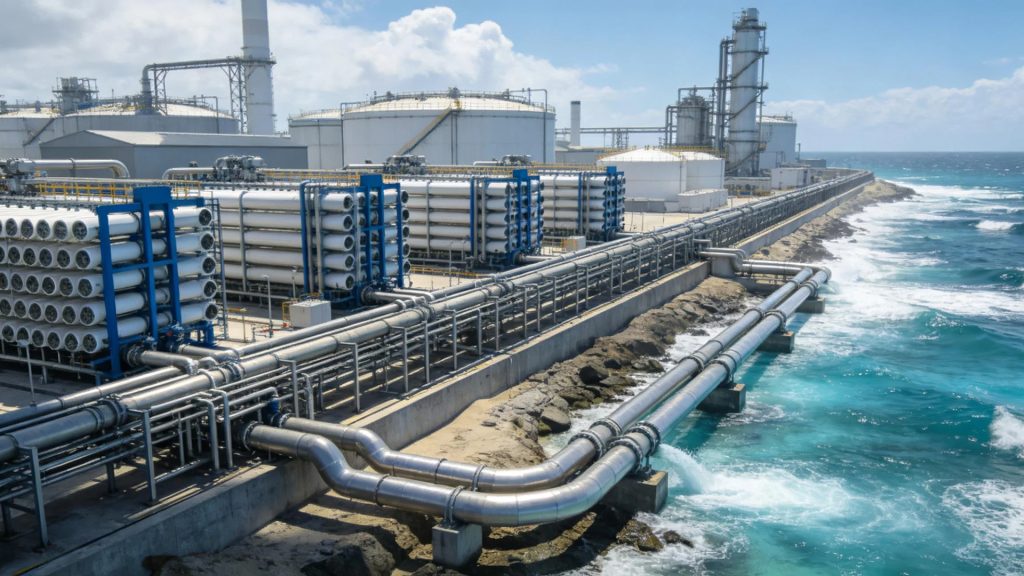
Municipal and commercial applications also benefit from reverse osmosis technology. RO water filtration can be used for drinking water purification, water reuse projects, and desalination processes. Its flexible design allows systems to be customized according to different water sources, treatment capacities, and quality targets.
By understanding how RO water filtration works, users can better evaluate system requirements and choose suitable treatment solutions. Proper application design, membrane selection, and operating control help ensure efficient performance and long-term reliability.
RO Water Filtration Supports Industrial Water Treatment Applications
RO water filtration plays an important role in industrial water treatment by providing reliable purification for processes that require consistent water quality. Many industries depend on purified water to maintain production stability, reduce contamination risks, and improve product quality. Applications such as manufacturing, electronics, pharmaceuticals, and food processing often require advanced treatment solutions to remove dissolved substances and maintain strict water standards.
Industrial RO systems can be customized according to feed water characteristics, production capacity, and treatment requirements. By selecting suitable membranes, pretreatment processes, and operating parameters, RO water filtration systems can provide stable water output and support continuous industrial operations.
RO Water Filtration Provides Reliable Water Quality for Manufacturing Processes
Manufacturing processes often require controlled water quality to prevent impurities from affecting production efficiency and product performance. RO water filtration helps reduce dissolved salts, minerals, and other contaminants that may interfere with industrial operations. With proper system design, RO equipment can provide consistent purified water and improve reliability in various manufacturing environments.
RO Systems Support High-Purity Water Requirements in Specialized Industries
Industries such as electronics and pharmaceuticals require higher levels of water purity because even small amounts of dissolved contaminants may affect production results. RO water filtration provides an effective purification method by reducing unwanted substances before water enters critical processes. Combined with suitable treatment stages, RO systems help industries achieve stable and controlled water quality.
RO Water Filtration Provides Solutions for Municipal and Commercial Water Needs
Beyond industrial applications, RO water filtration is also widely used in municipal and commercial water treatment projects. These systems help improve water quality by reducing dissolved contaminants and producing purified water for different purposes. Municipal projects may use RO technology for drinking water treatment, water reuse, and desalination applications.
Commercial facilities also benefit from flexible RO system designs that can be adjusted according to water sources and usage requirements. Whether used in buildings, hospitality facilities, or service industries, RO water filtration provides a reliable approach for achieving cleaner and safer water supplies.
RO Water Filtration Improves Drinking Water Purification Performance
Drinking water applications require effective removal of substances that may affect taste, quality, and safety. RO water filtration can reduce dissolved salts, minerals, and other impurities to improve overall water quality. With appropriate system configuration, RO equipment provides a stable purification solution for commercial and residential drinking water applications.
RO Technology Supports Water Reuse and Desalination Projects
Water reuse and desalination projects require efficient methods for removing dissolved contaminants from treated water sources. RO water filtration provides an effective separation process that helps convert lower-quality water into usable water resources. Its ability to handle different feed water conditions makes RO technology suitable for sustainable water management applications.
Proper System Design Optimizes RO Water Filtration Applications
The effectiveness of an RO system depends not only on membrane technology but also on proper application design. Different water sources, treatment targets, and capacity requirements require different system configurations. Evaluating feed water quality, selecting suitable membranes, and optimizing operating conditions help ensure that RO water filtration systems achieve expected performance.
A well-designed RO solution improves efficiency, reduces maintenance requirements, and supports long-term operation. By matching system specifications with actual application needs, users can achieve reliable purification results and maximize the value of their water treatment investment.
Customized RO Water Filtration Systems Meet Different Treatment Requirements
Different applications require different water treatment strategies based on contamination levels, production capacity, and quality standards. Customized RO water filtration systems allow manufacturers to adjust components, membrane configurations, and pretreatment processes according to specific requirements. This flexibility helps users achieve more efficient and reliable water purification performance.