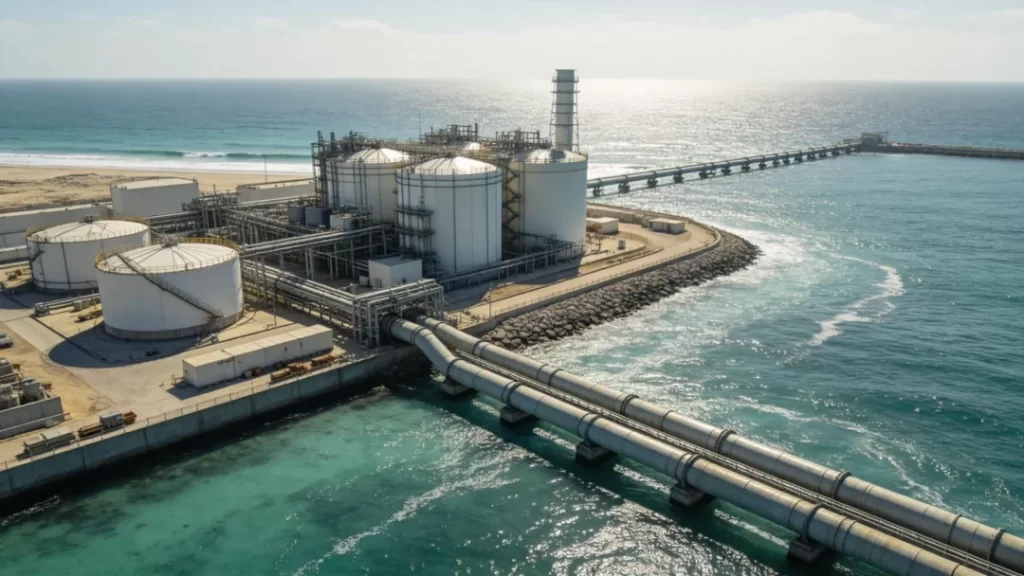
Guia de conhecimentos do processo de dessalinização da água do mar
O conhecimento do processo de dessalinização da água do mar fornece uma compreensão estruturada de como a água salina é transformada em água doce confiável. Ao aprender as etapas principais — captação, pré-tratamento, dessalinização e pós-tratamento —, engenheiros e planejadores podem projetar usinas eficientes, controlar incrustações e corrosão e garantir qualidade estável da água com uso otimizado de energia.
Artigos relacionados ao conhecimento do processo de dessalinização da água do mar
O conhecimento sobre equipamentos de dessalinização de água do mar pode apoiar a seleção do sistema
O conhecimento abrangente dos equipamentos de dessalinização da água do mar ajuda engenheiros e planejadores de projetos a avaliar tecnologias, combinar componentes com as condições da água de alimentação e equilibrar custo, durabilidade e eficiência. Compreender membranas, bombas, unidades de pré-tratamento e dispositivos de recuperação de energia apoia a seleção informada do sistema e a confiabilidade operacional a longo prazo.
Fatores-chave de desempenho do equipamento
A seleção de equipamentos de dessalinização requer uma avaliação cuidadosa do fluxo da membrana, rejeição de sal, tolerância à pressão e resistência à incrustação e formação de depósitos. As bombas de alta pressão e os dispositivos de recuperação de energia devem estar alinhados com a capacidade do sistema e as metas energéticas, enquanto as unidades de pré-tratamento devem corresponder à qualidade local da água do mar e à variabilidade sazonal. Considerar o custo do ciclo de vida, a acessibilidade da manutenção e a durabilidade do material garante um desempenho estável e despesas operacionais previsíveis ao longo da vida útil da planta.
A seleção eficaz do sistema depende de quão bem os equipamentos se integram com os processos de captação, pré-tratamento, skids de osmose inversa e pós-tratamento. A compatibilidade no design hidráulico, nas interfaces de controle e nas restrições de espaço físico favorece uma instalação e operação tranquilas. Os engenheiros também devem avaliar estratégias de redundância, níveis de automação e opções de expansão futura para que a planta de dessalinização mantenha a confiabilidade, se adapte ao crescimento da demanda e atenda aos padrões de qualidade da água sob condições variáveis.
Uma configuração eficaz do sistema de UF integra o pré-tratamento, os módulos de membrana e o controlo hidráulico para manter um desempenho de filtração estável sob condições variáveis da água. As considerações de projeto incluem a operação de fluxo cruzado ou de extremidade fechada, estratégias de contralavagem e limpeza química, e instrumentação para monitorizar a pressão e o fluxo. Uma configuração otimizada reduz a incrustação, prolonga a vida útil da membrana e garante uma qualidade consistente do filtrado, apoiando um funcionamento fiável tanto em sistemas de tratamento autónomos como integrados.