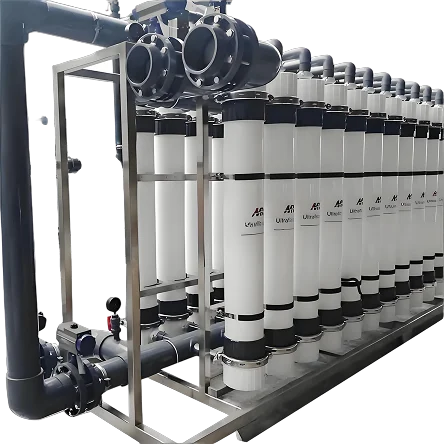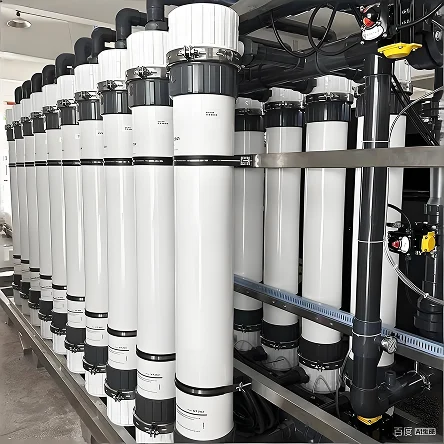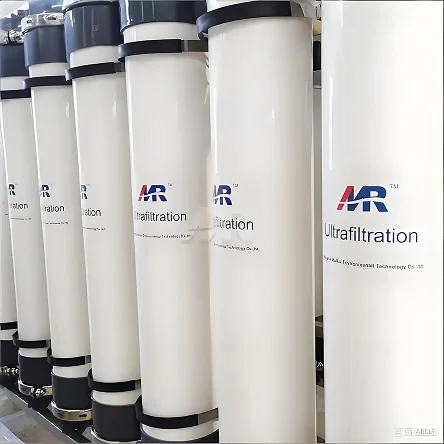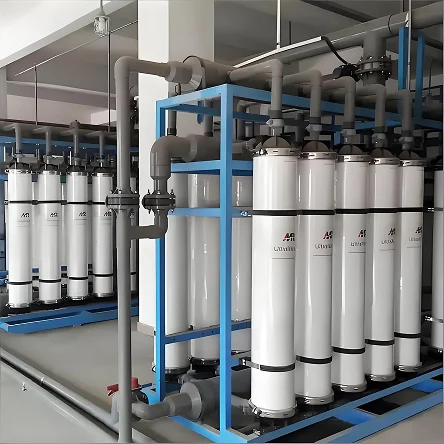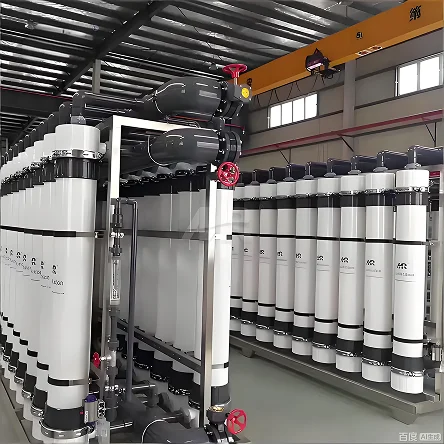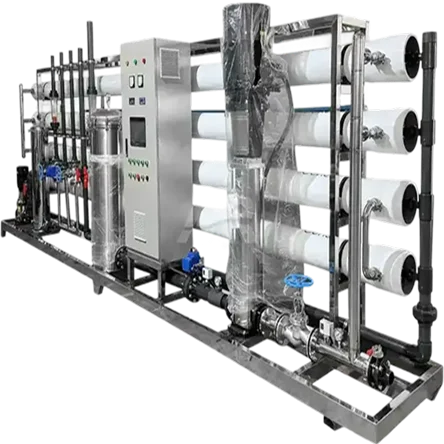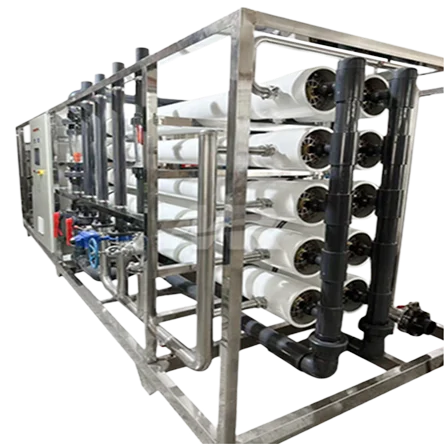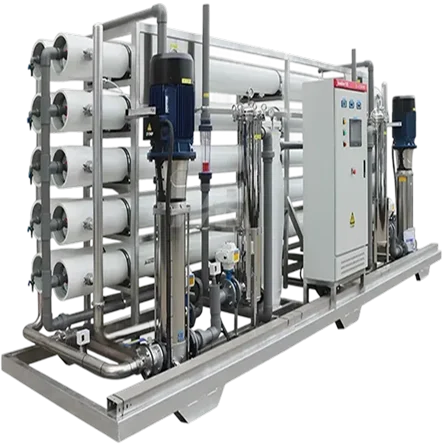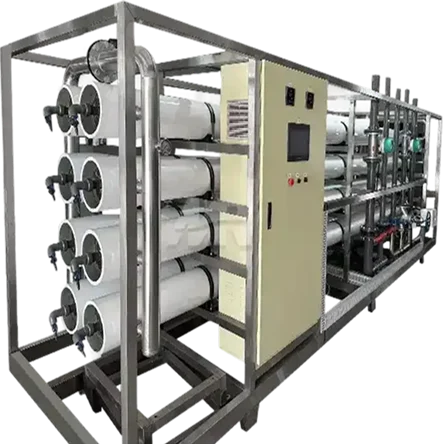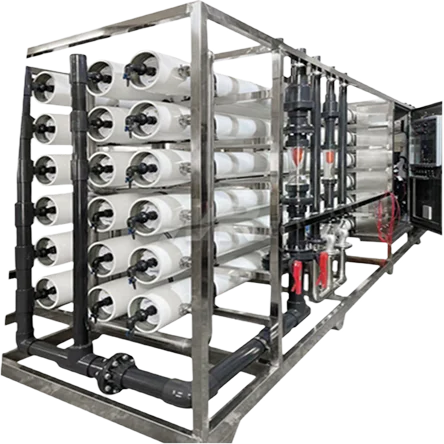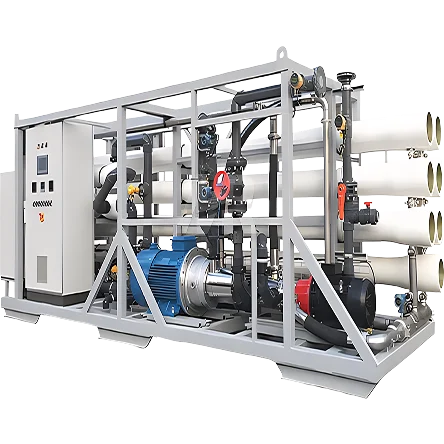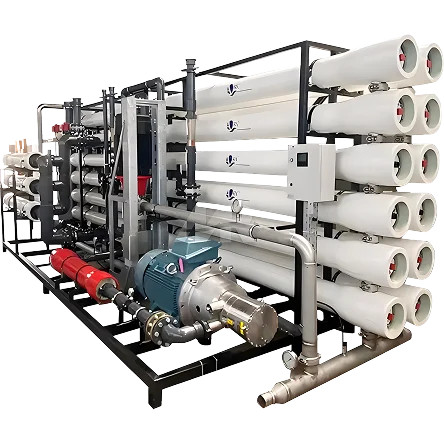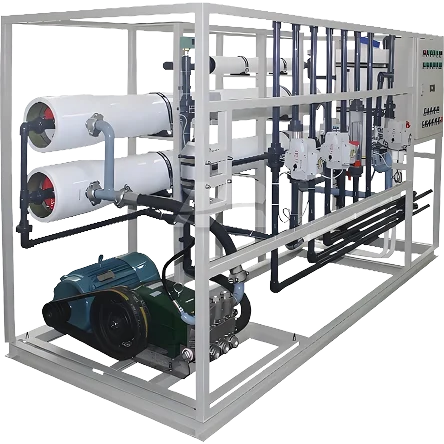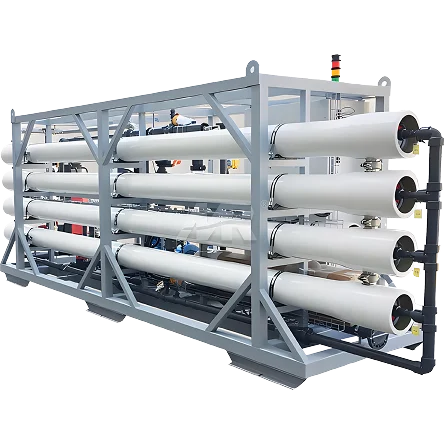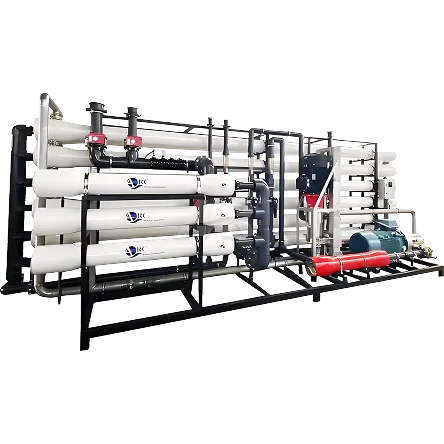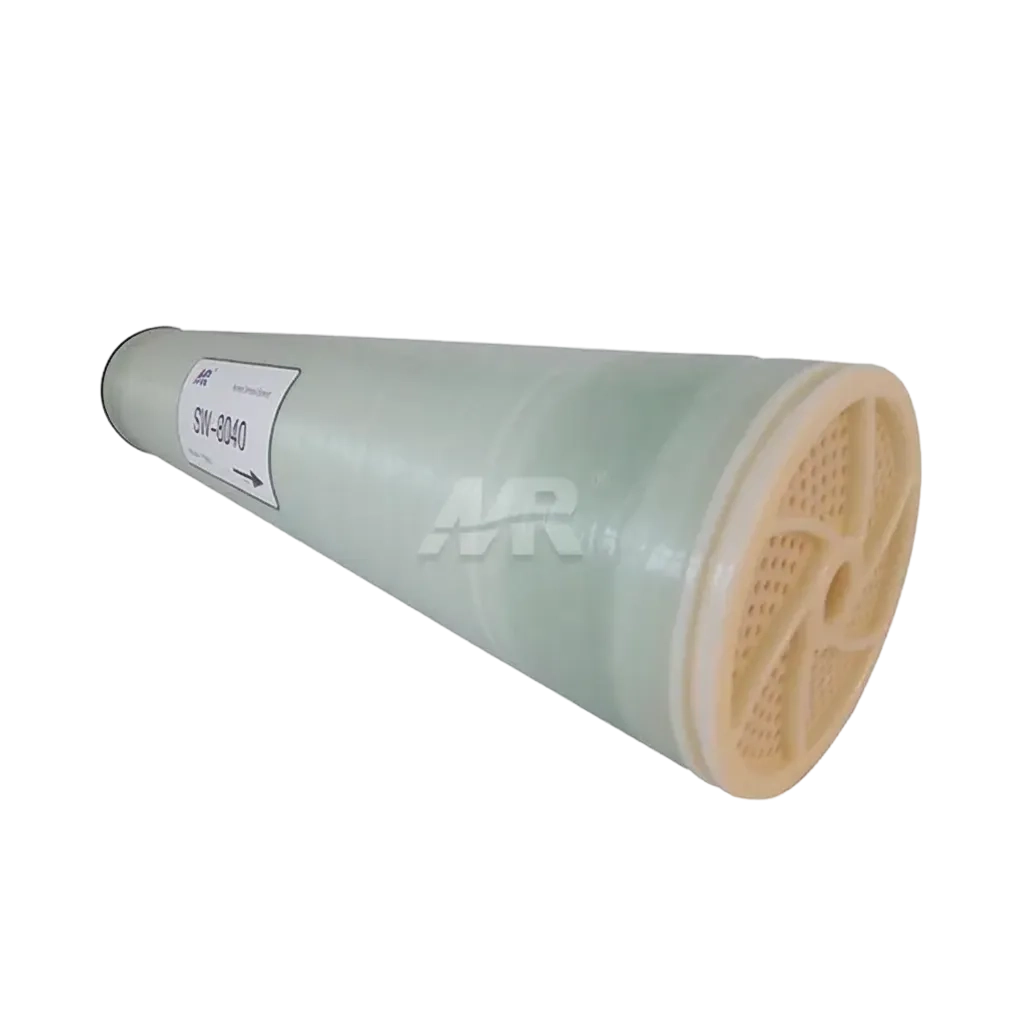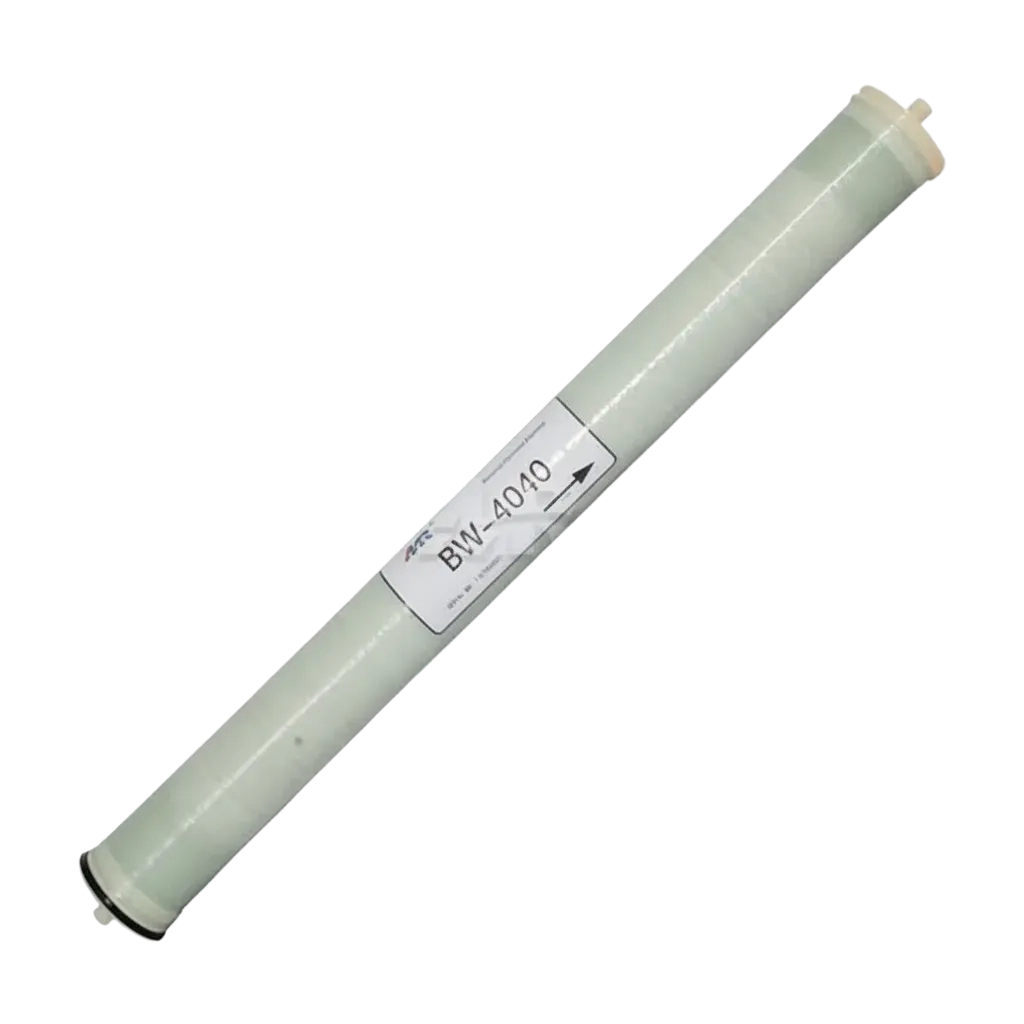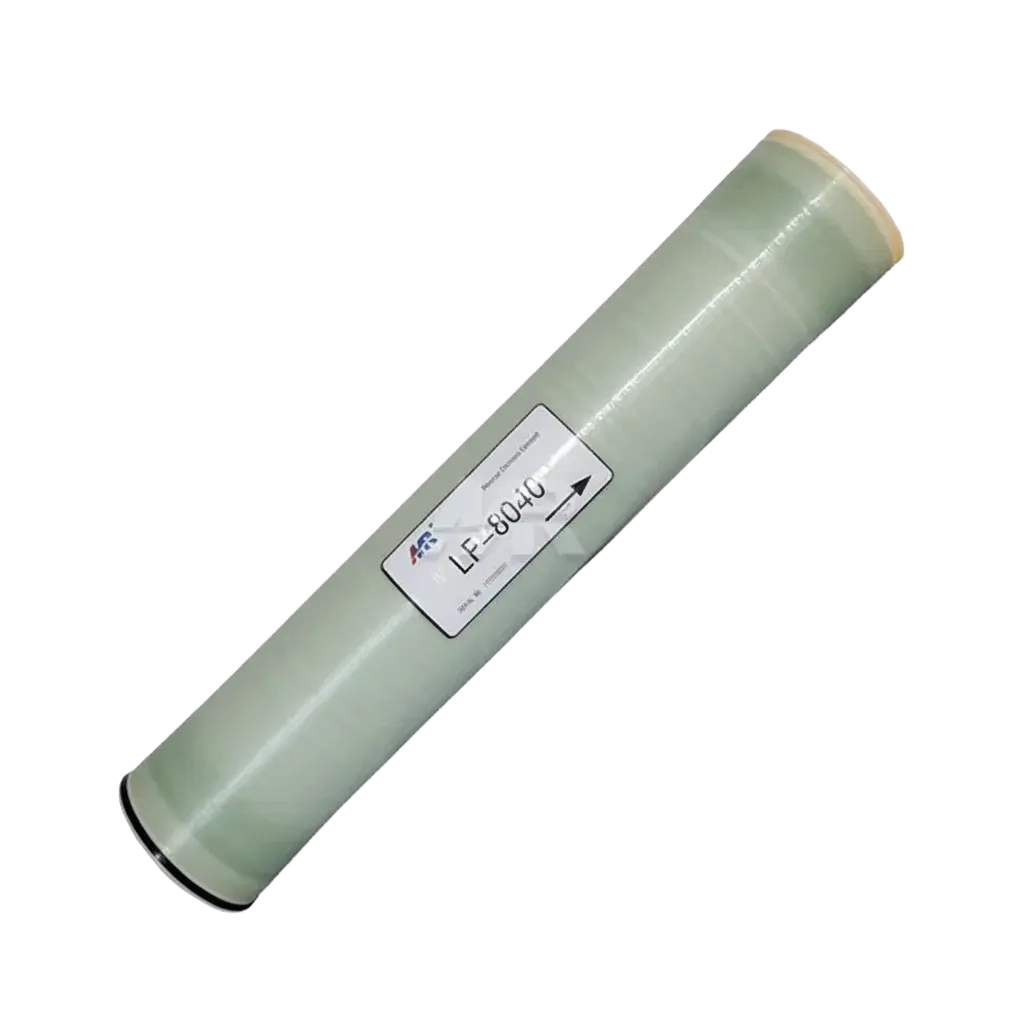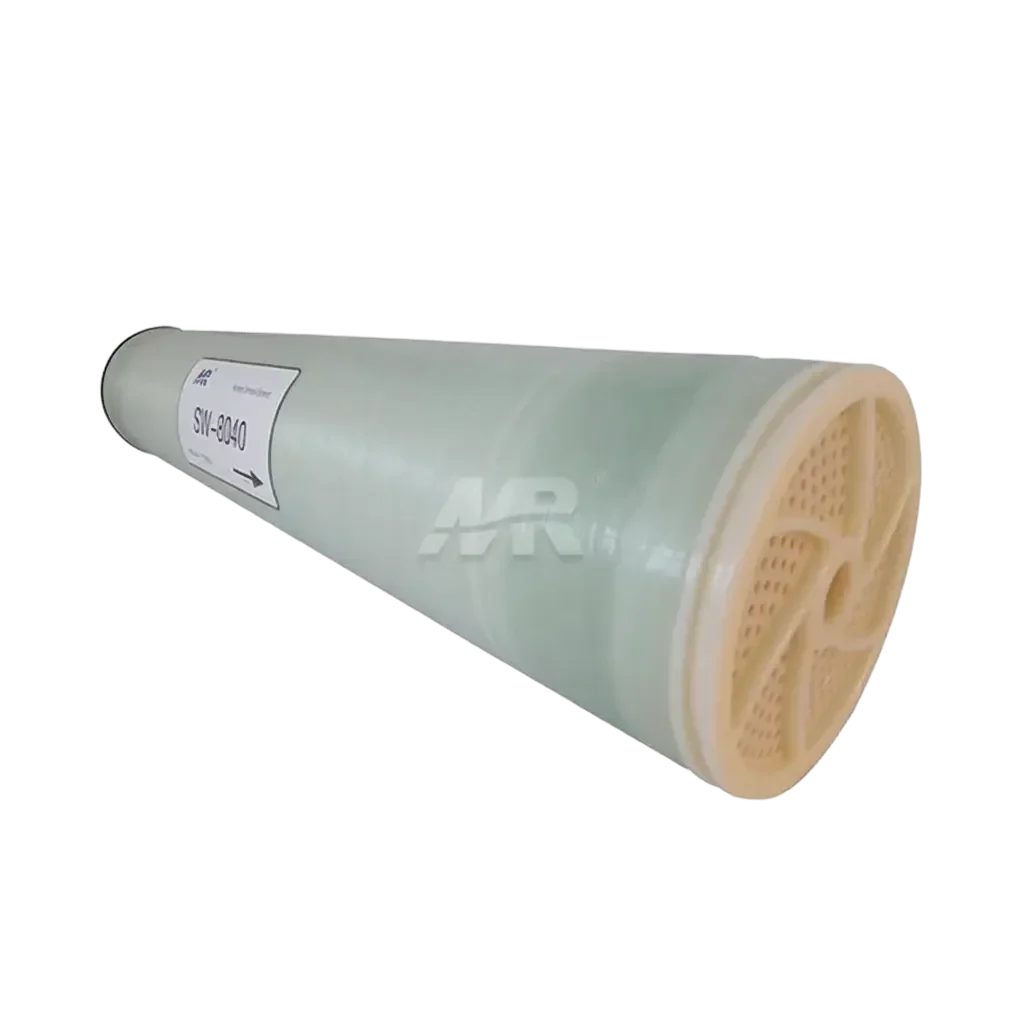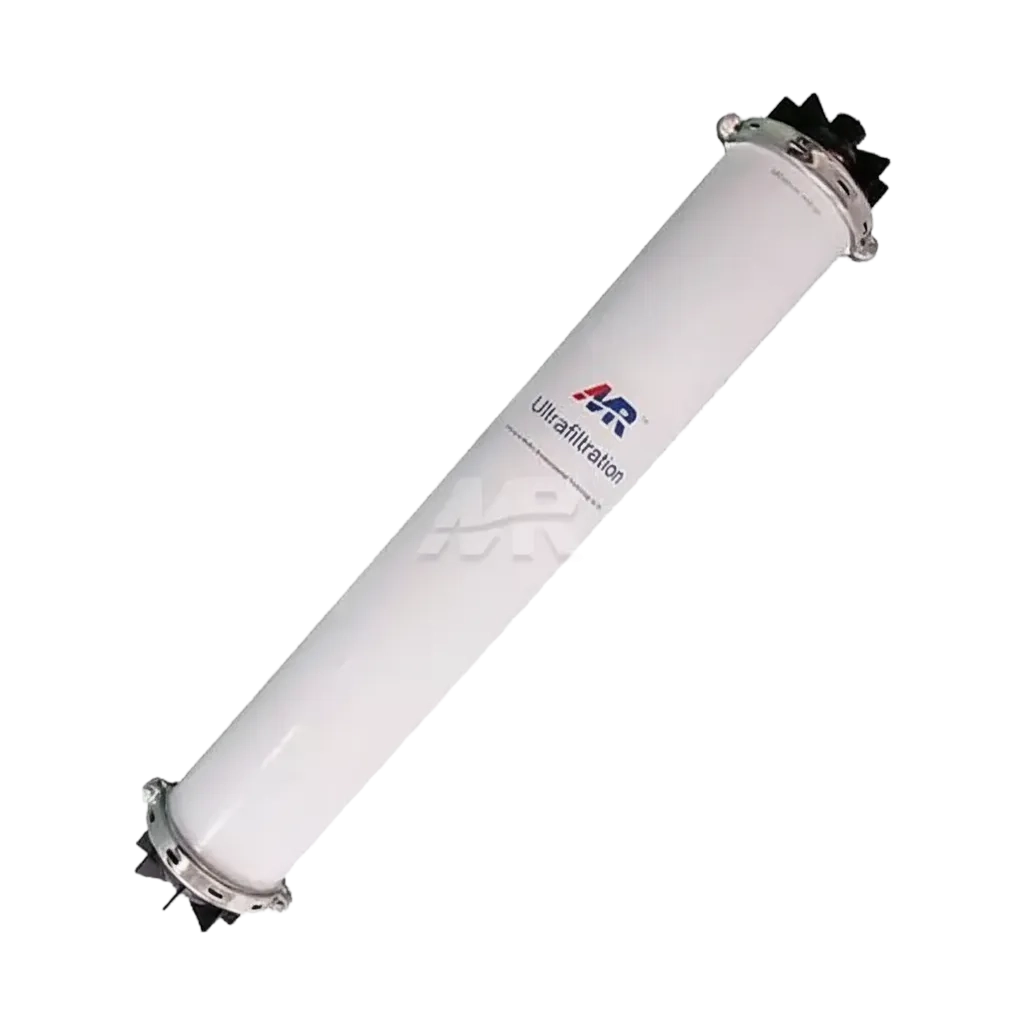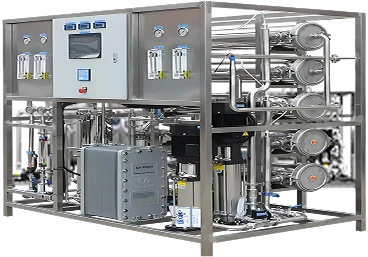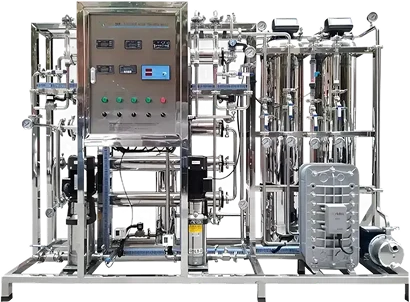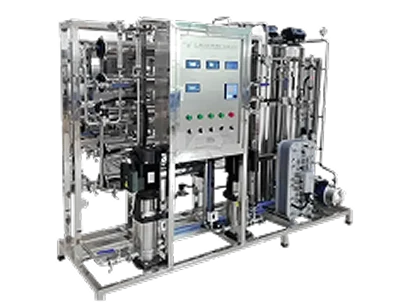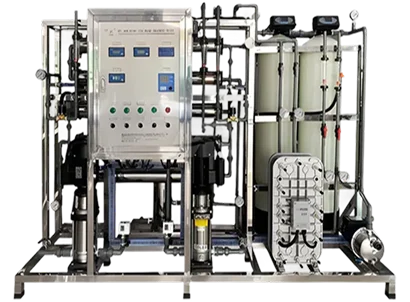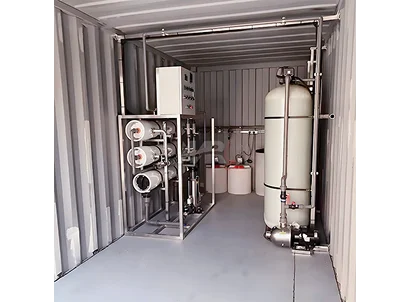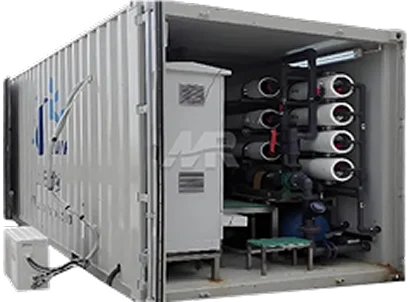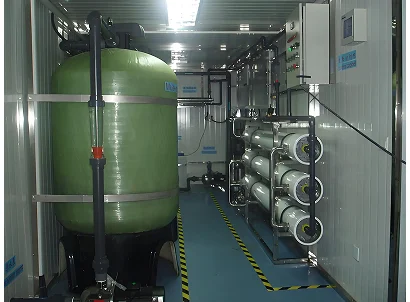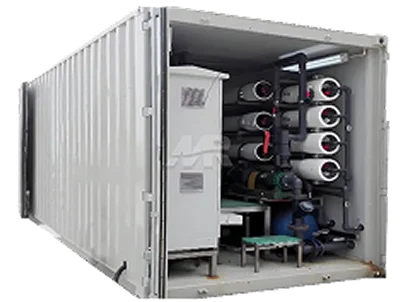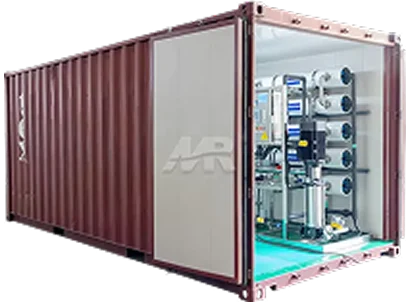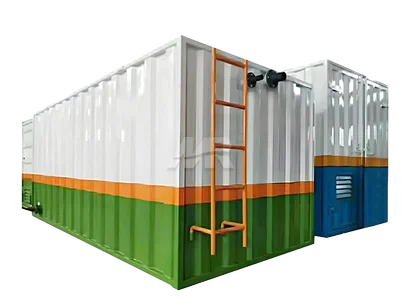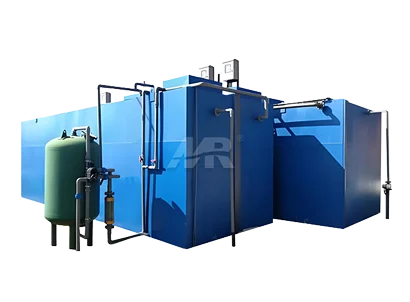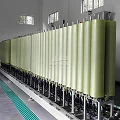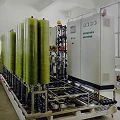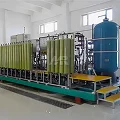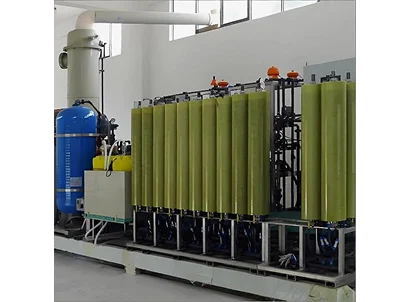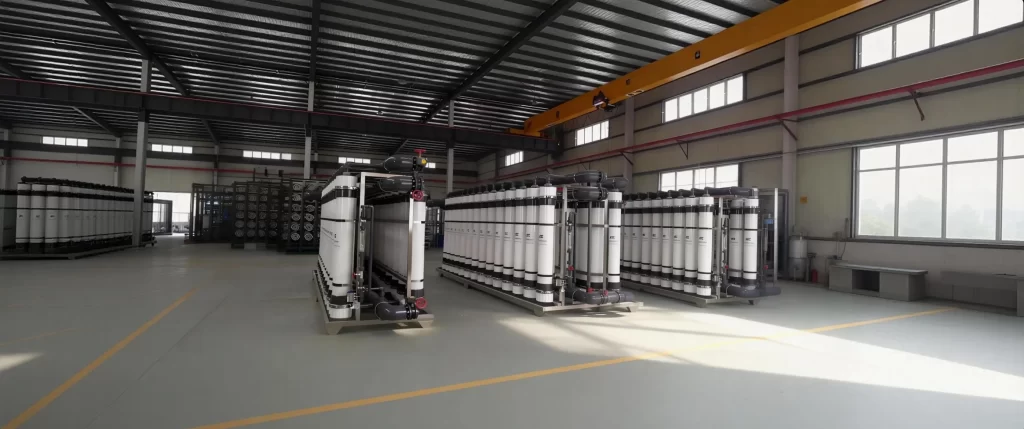





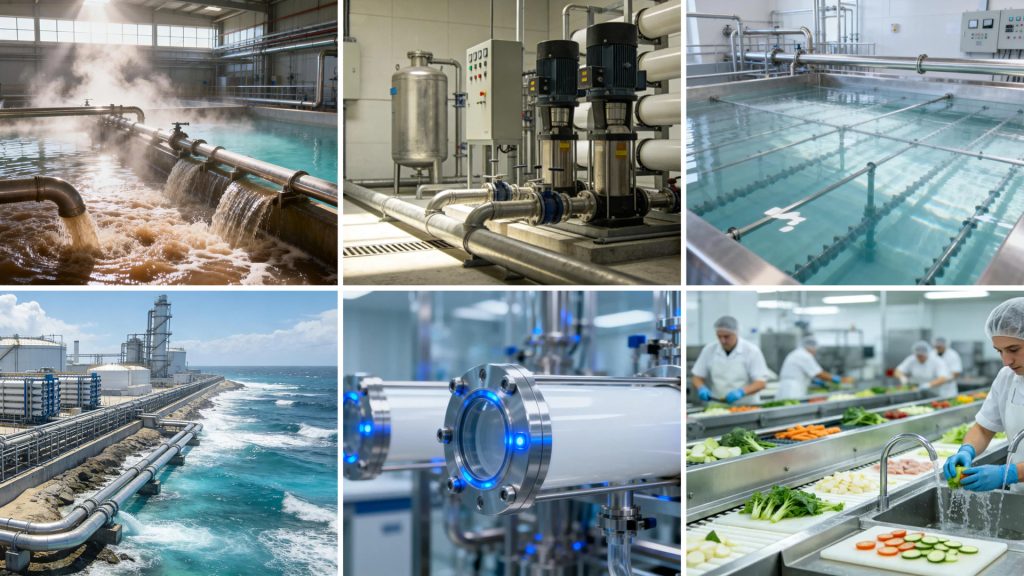
RO Filtration is widely used across industrial, commercial, and municipal sectors to produce high-quality purified water for different process requirements. Many industries choose customized Reverse Osmosis System solutions to achieve stable water quality and reliable operation. From seawater desalination and food production to pharmaceutical manufacturing and power generation, each application requires specific membrane configurations, pretreatment methods, and operating conditions. Understanding RO Filtration applications helps engineers and buyers select suitable systems that improve water quality, increase operational efficiency, reduce maintenance costs, and support long-term sustainable water management.
Common Applications of RO Filtration Systems
| Aplicação | Main Water Treatment Purpose | Key RO Filtration Benefits |
|---|---|---|
| Tratamento de Água Industrial | Producing purified process water for manufacturing operations | Removes dissolved solids, protects equipment, improves process stability |
| Produção de alimentos e bebidas | Providing consistent-quality water for production and cleaning | Improves product consistency and supports food safety requirements |
| Indústria farmacêutica | Producing high-purity water for manufacturing and laboratories | Reduces contaminants and supports strict water quality standards |
| Dessalinização de água do mar | Converting seawater into freshwater resources | Removes salts and provides reliable freshwater production |
| Tratamento de água municipal | Improving drinking water quality and removing contaminants | Supports safe water supply and regulatory compliance |
| Water Reuse and Recycling | Treating wastewater for reuse applications | Reduces freshwater consumption and improves resource efficiency |
| Geração de energia | Producing boiler feedwater and cooling water | Prevents scaling, corrosion, and equipment damage |
How Is RO Filtration Used in Industrial Water Treatment?
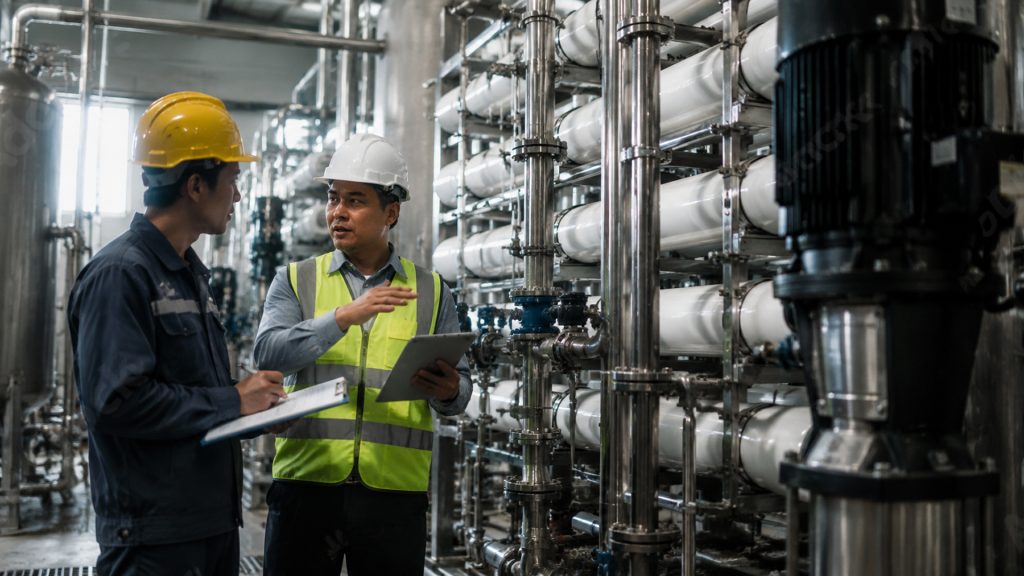
RO Filtration plays a critical role in industrial water treatment by removing dissolved salts, organic contaminants, and suspended impurities from process water. Industries such as chemicals, electronics, power generation, and manufacturing rely on RO Filtration to produce high-quality water that protects production equipment and improves product quality. Proper system design, pretreatment, and membrane selection help industrial users reduce operating costs, improve water recovery, and achieve stable long-term treatment performance under varying production conditions.
RO Filtration Applications in Industrial Process Water Treatment
Industrial processes often require high-quality water with controlled levels of dissolved solids, minerals, and contaminants. RO Filtration provides an effective solution by using semi-permeable membranes to separate impurities from feedwater and produce purified water. In manufacturing environments, RO Filtration helps protect sensitive equipment, improve production consistency, and reduce scaling or corrosion risks. By selecting suitable membranes, pretreatment systems, and operating parameters, industries can achieve efficient water purification while maintaining stable performance and reducing long-term operating costs.
RO Filtration Protection for Industrial Equipment Performance
RO Filtration helps protect industrial equipment by reducing dissolved minerals, salts, and contaminants that may cause scaling, corrosion, or performance problems. High-quality purified water improves the reliability of boilers, cooling systems, production lines, and other process equipment. Effective pretreatment before RO Filtration reduces membrane fouling and extends system lifespan. As a result, industries can minimize maintenance requirements, improve operational efficiency, and maintain consistent production performance.
Common Industrial Applications of RO Filtration Systems
RO Filtration systems are widely used in industries that require reliable water purification, including electronics manufacturing, chemical processing, pharmaceuticals, food production, and power generation. Electronics manufacturers use Ultrapure Water RO System solutions to produce low-conductivity water for precision processes, while chemical and pharmaceutical industries rely on purified water for production and cleaning applications. Each industry requires different system configurations based on water quality requirements, capacity needs, and operating conditions, making customized RO Filtration solutions essential for achieving optimal results.
RO Filtration Applications in Electronics and Manufacturing Industries
Electronics and manufacturing industries require highly purified water to prevent contamination and maintain product quality during production. RO Filtration removes dissolved ions, particles, and impurities that may affect manufacturing processes or equipment performance. Combined with suitable pretreatment and monitoring systems, RO Filtration provides stable water quality and supports demanding industrial applications. Reliable purification helps manufacturers improve production efficiency, reduce equipment issues, and maintain consistent product standards.
Efficiency Improvement Strategies for Industrial RO Filtration Systems
Optimizing an industrial RO Filtration system requires careful consideration of feedwater characteristics, membrane selection, operating pressure, recovery rate, and maintenance strategies. Proper system design helps minimize membrane fouling, reduce energy consumption, and maximize water production efficiency. Regular monitoring of pressure, flow rate, and water quality allows operators to identify performance changes and take preventive actions. An optimized RO Filtration system delivers reliable purification performance, extends membrane service life, and supports sustainable industrial water management.
Why Is RO Filtration Important for Food and Beverage Production?
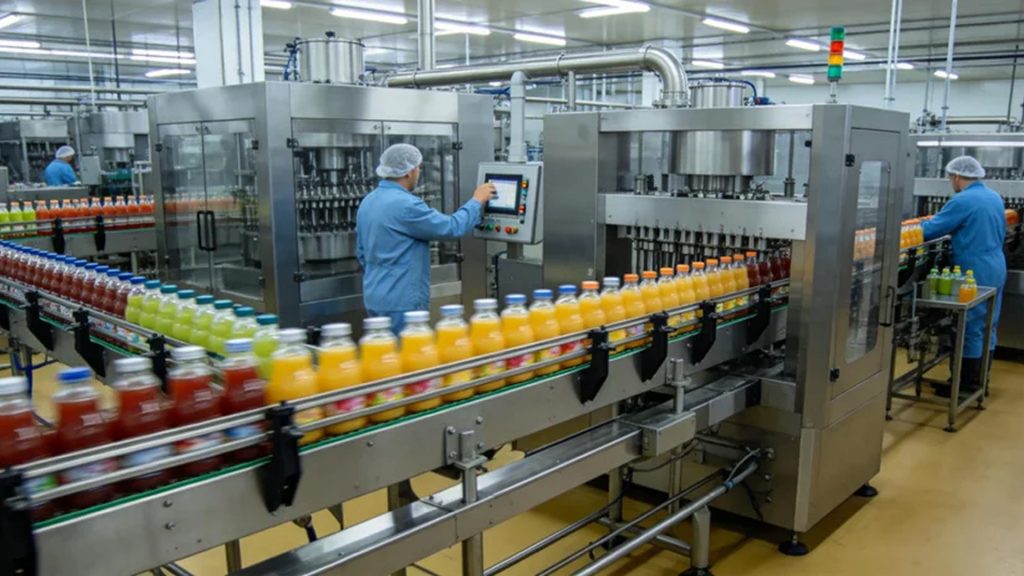
RO Filtration is widely applied in the food and beverage industry through specially designed Food Industry RO System solutions because it provides consistent water quality for beverage production, ingredient preparation, equipment cleaning, and process water treatment. Removing dissolved minerals, microorganisms, and unwanted contaminants helps improve product consistency, extend equipment life, and meet food safety standards. A properly designed RO Filtration system also supports water reuse initiatives and reduces operational costs while maintaining reliable production efficiency.
RO Filtration Benefits for Water Quality in Food and Beverage Production
Water quality directly affects the taste, safety, and consistency of food and beverage products. RO Filtration removes dissolved salts, minerals, organic compounds, and other impurities that may influence product characteristics. By producing purified process water with stable quality, RO Filtration helps manufacturers maintain consistent recipes, improve production reliability, and reduce variations caused by raw water conditions. A properly designed RO Filtration system provides an effective solution for meeting strict water quality requirements in modern food and beverage manufacturing.
RO Filtration Support for Beverage Production Quality
In beverage production, water is one of the most important ingredients that influences product taste and overall quality. RO Filtration helps remove unwanted minerals, odors, and contaminants from source water before it enters the production process. Consistent purified water allows manufacturers to maintain product flavor, improve batch stability, and reduce quality variations. By integrating RO Filtration with suitable pretreatment and monitoring systems, beverage producers can achieve reliable water purification performance and meet production requirements.
Food and Beverage Applications of RO Filtration Systems
RO Filtration systems are widely used in different food and beverage applications, including bottled water production, dairy processing, brewing, beverage manufacturing, and food ingredient preparation. These industries require reliable water purification to control dissolved solids, microorganisms, and chemical contaminants. Depending on the application, RO Filtration systems can be customized with different membrane configurations, pretreatment solutions, and capacities. Proper system selection helps food and beverage manufacturers improve efficiency, reduce water waste, and maintain consistent production standards.
RO Filtration Applications in Food Processing and Equipment Cleaning
Food processing facilities require high-quality water not only for production but also for equipment cleaning and sanitation processes. RO Filtration helps reduce contaminants that may affect hygiene standards, equipment performance, or product safety. Purified water minimizes scaling and residue buildup inside pipelines and processing equipment, reducing maintenance requirements. By providing stable water quality, RO Filtration supports efficient cleaning operations and helps food manufacturers maintain safe and reliable production environments.
RO Filtration System Selection for Food and Beverage Applications
Selecting the right RO Filtration system for food and beverage applications requires evaluating raw water quality, production capacity, required water purity, and operating conditions. Factors such as membrane type, pretreatment design, recovery rate, and cleaning requirements influence system performance. A well-designed RO Filtration solution should balance purification efficiency, energy consumption, maintenance needs, and regulatory requirements. Proper selection ensures reliable operation, extends membrane lifespan, and provides consistent water quality throughout the production process.
How Does RO Filtration Support Pharmaceutical Water Purification?
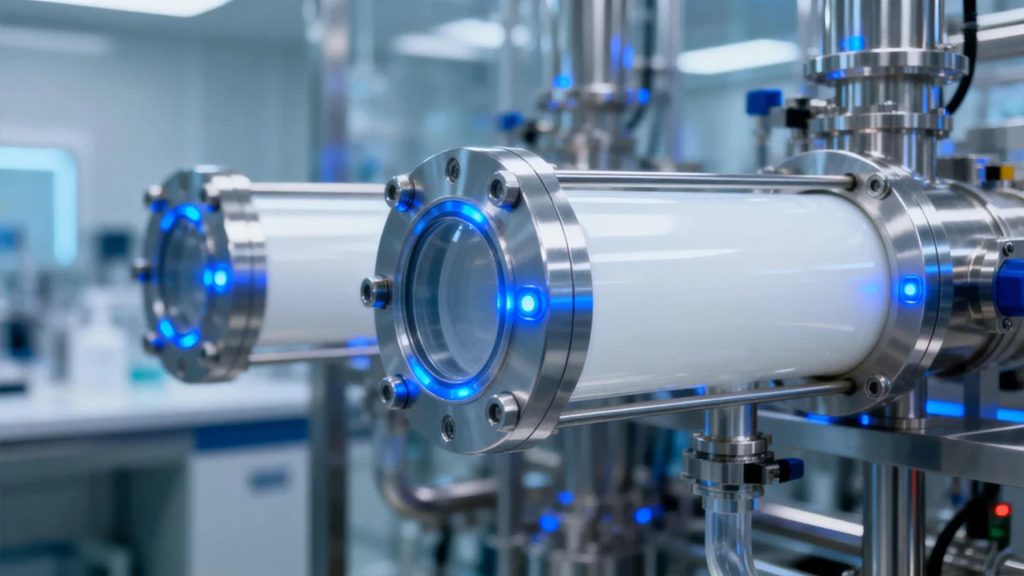
The pharmaceutical industry requires extremely high water quality for manufacturing, cleaning, and laboratory applications. RO Filtration removes dissolved salts, microorganisms, endotoxins, and organic contaminants before additional purification processes such as electrodeionization (EDI) or ultraviolet sterilization. Selecting the appropriate RO Filtration system helps pharmaceutical manufacturers maintain product quality, comply with regulatory requirements, and achieve reliable long-term operation with consistent purified water production.
Importance of RO Filtration in Pharmaceutical Water Treatment
RO Filtration is an essential purification technology in pharmaceutical water treatment because it effectively reduces dissolved impurities, microorganisms, organic substances, and other contaminants from feedwater. High-quality purified water is required for drug manufacturing, equipment cleaning, and laboratory processes where water purity directly affects product safety and consistency. By providing stable water quality before advanced purification stages, RO Filtration helps pharmaceutical facilities improve treatment efficiency, protect downstream equipment, and maintain reliable water purification performance.
RO Filtration Benefits for Pharmaceutical Water Quality Improvement
RO Filtration improves pharmaceutical water quality by using semi-permeable membranes to separate unwanted substances from feedwater. The process significantly reduces dissolved solids, salts, microorganisms, and organic contaminants that may affect pharmaceutical production. When combined with pretreatment and polishing technologies such as EDI or UV sterilization, RO Filtration helps achieve the high purity levels required for pharmaceutical applications. A properly designed system provides consistent purified water quality and supports strict production standards.
Pharmaceutical Applications of RO Filtration Systems
RO Filtration systems are widely used in pharmaceutical applications including purified water production, manufacturing processes, equipment cleaning, and laboratory preparation. These applications require stable water quality to prevent contamination risks and maintain product reliability. RO Filtration is often integrated with additional purification technologies to meet specific water quality requirements. By selecting suitable membrane configurations, pretreatment systems, and monitoring solutions, pharmaceutical manufacturers can achieve efficient purification and maintain consistent water supply for critical operations.
Pretreatment Importance Before Pharmaceutical RO Filtration
Pretreatment is essential before pharmaceutical RO Filtration because it protects membranes from fouling, scaling, and damage caused by suspended solids, organic matter, and hardness minerals. Common pretreatment methods include filtration, activated carbon treatment, softening, and chemical dosing. Effective pretreatment improves membrane performance, extends service life, and reduces cleaning frequency. For pharmaceutical applications, proper pretreatment design helps ensure the RO Filtration system maintains stable operation and produces consistent purified water quality.
RO Filtration System Selection for Pharmaceutical Applications
Selecting an RO Filtration system for pharmaceutical applications requires careful evaluation of feedwater characteristics, required water purity, production capacity, regulatory requirements, and integration with downstream purification processes. Factors such as membrane performance, system configuration, monitoring capability, and maintenance requirements influence long-term reliability. A properly designed RO Filtration solution helps pharmaceutical manufacturers achieve efficient purification, reduce operational risks, and maintain continuous production with consistent high-quality water.
How Is RO Filtration Applied in Seawater Desalination?
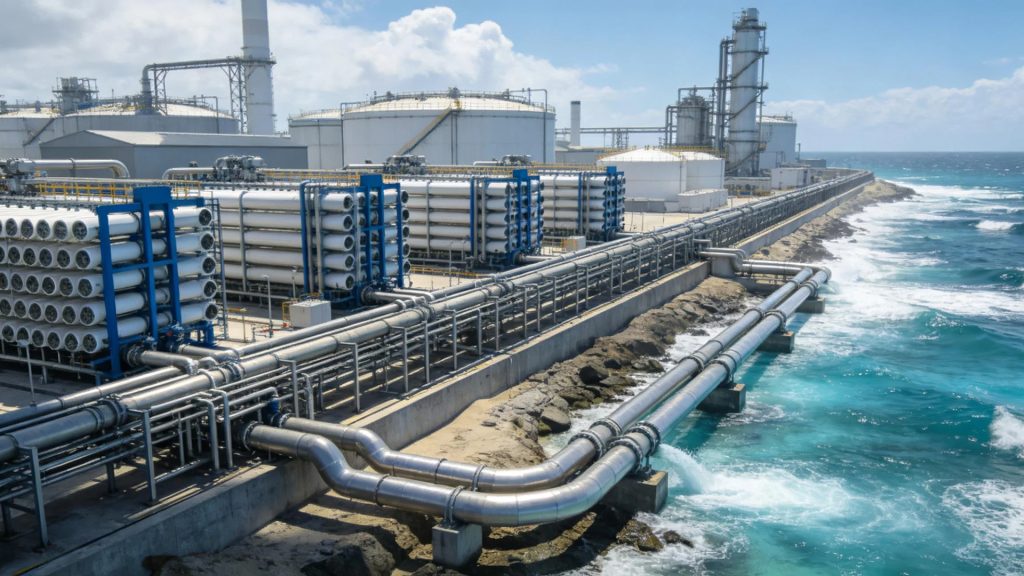
RO Filtration is one of the most widely used technologies for seawater desalination because it efficiently removes dissolved salts and produces fresh water suitable for municipal, industrial, and commercial use. Seawater applications require high-pressure pumps, corrosion-resistant materials, and effective pretreatment to minimize membrane fouling and scaling. Properly designed RO Filtration systems improve freshwater production, reduce energy consumption, and provide reliable operation in demanding desalination environments.
RO Filtration Effectiveness in Seawater Desalination
RO Filtration is widely used in seawater desalination because it can effectively remove dissolved salts, minerals, and other impurities from seawater under high operating pressure. The semi-permeable membrane allows water molecules to pass through while rejecting most dissolved substances, producing freshwater with improved quality. Compared with traditional desalination methods, RO Filtration offers high purification efficiency, flexible system design, and lower energy consumption. Proper membrane selection and operating control enable seawater RO systems to provide reliable freshwater production for different applications.
Salt Removal Process of RO Filtration in Seawater Desalination
RO Filtration removes salt from seawater by applying high pressure to force water through a specialized reverse osmosis membrane. The membrane structure blocks dissolved salts, ions, and other contaminants while allowing purified water to pass through. Because seawater contains high concentrations of dissolved solids, seawater RO Filtration systems require advanced membranes and carefully controlled operating conditions. Effective salt rejection helps produce high-quality freshwater and supports reliable desalination performance for industrial, municipal, and commercial water supply applications.
Key Components of a Seawater RO Filtration System
A seawater RO Filtration system includes several essential components designed to handle high salinity and challenging operating conditions. Key components include seawater intake systems, pretreatment units, high-pressure pumps, RO membrane modules, pressure vessels, and monitoring equipment. Each component contributes to stable operation by protecting membranes, maintaining required pressure, and controlling water quality. Proper system integration helps reduce fouling risks, improve energy efficiency, and extend the service life of seawater RO Filtration equipment.
Pretreatment Requirements for Seawater RO Filtration Performance
Pretreatment is a critical stage before seawater enters the RO Filtration process because seawater contains suspended particles, microorganisms, organic matter, and scaling compounds. Filtration, ultrafiltration, chemical dosing, and other pretreatment methods help reduce membrane fouling and protect RO elements from damage. Effective pretreatment improves system stability, reduces cleaning frequency, and extends membrane lifespan. For seawater desalination applications, proper pretreatment design is essential for maintaining long-term RO Filtration performance.
Efficiency Optimization Strategies for Seawater RO Filtration Systems
Improving seawater RO Filtration efficiency requires optimizing membrane performance, operating pressure, recovery rate, and energy management. Advanced membrane technologies, efficient high-pressure pumps, and accurate monitoring systems help reduce energy consumption while maintaining high freshwater production. Regular maintenance, including membrane cleaning and performance monitoring, prevents efficiency decline caused by fouling and scaling. A well-designed RO Filtration system achieves a balance between water output, energy efficiency, and long-term operational reliability in seawater desalination projects.
How Does RO Filtration Improve Municipal Water Treatment?
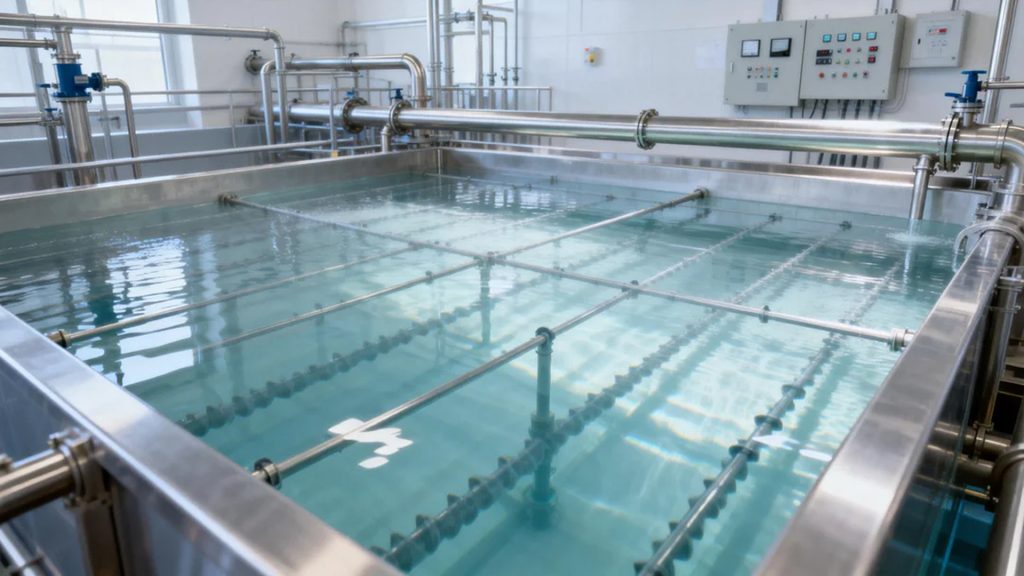
Municipal water treatment facilities use RO Filtration to improve drinking water quality by reducing dissolved solids, nitrates, heavy metals, microorganisms, and other contaminants. Depending on raw water quality and local regulations, RO Filtration may be integrated with pretreatment, activated carbon filtration, ultraviolet disinfection, or other purification technologies. A well-designed system helps municipalities provide safe, reliable drinking water while supporting sustainable water resource management.
RO Filtration Applications in Municipal Water Treatment Systems
RO Filtration is increasingly used in municipal water treatment because it provides effective removal of dissolved contaminants that conventional filtration methods may not completely eliminate. It can reduce total dissolved solids (TDS), salts, nitrates, heavy metals, and other unwanted substances from raw water sources. By producing high-quality treated water, RO Filtration helps municipalities improve drinking water safety, meet quality requirements, and provide reliable water supplies for residential and public use.
Contaminant Removal Capability of RO Filtration in Municipal Water Treatment
RO Filtration can remove a wide range of contaminants that affect municipal water quality, including dissolved salts, heavy metals, nitrates, fluoride, microorganisms, and organic compounds. The removal efficiency depends on membrane performance, feedwater characteristics, and system operating conditions. By selecting suitable RO Filtration membranes and supporting treatment processes, municipalities can address specific water quality challenges and improve the safety, reliability, and consistency of treated drinking water.
RO Filtration Integration With Municipal Water Treatment Processes
Municipal RO Filtration systems are often combined with other water treatment technologies to achieve better overall performance. Pretreatment methods such as media filtration, activated carbon filtration, and cartridge filtration help protect RO membranes from fouling. Additional processes such as ultraviolet disinfection or mineral adjustment may be applied after RO Filtration to meet specific drinking water requirements. Proper integration allows municipalities to optimize treatment efficiency while maintaining stable long-term operation.
Pretreatment Requirements Before Municipal RO Filtration
Pretreatment is essential before municipal RO Filtration because raw water may contain suspended particles, organic matter, microorganisms, and substances that can reduce membrane performance. Effective pretreatment lowers fouling and scaling risks, improves membrane lifespan, and reduces maintenance frequency. Depending on raw water conditions, municipalities may use filtration, activated carbon, softening, or chemical dosing before RO Filtration. Proper pretreatment design ensures stable operation and consistent treated water quality.
RO Filtration Contribution to Sustainable Municipal Water Management
RO Filtration supports sustainable municipal water management by improving water purification efficiency and enabling the treatment of challenging water sources. It can be applied in drinking water production, groundwater treatment, desalination projects, and water reuse systems. Through optimized system design, energy management, and membrane maintenance strategies, RO Filtration helps municipalities reduce water waste, improve resource utilization, and provide dependable water supplies for growing communities.
Why Is RO Filtration Used for Water Reuse and Recycling?
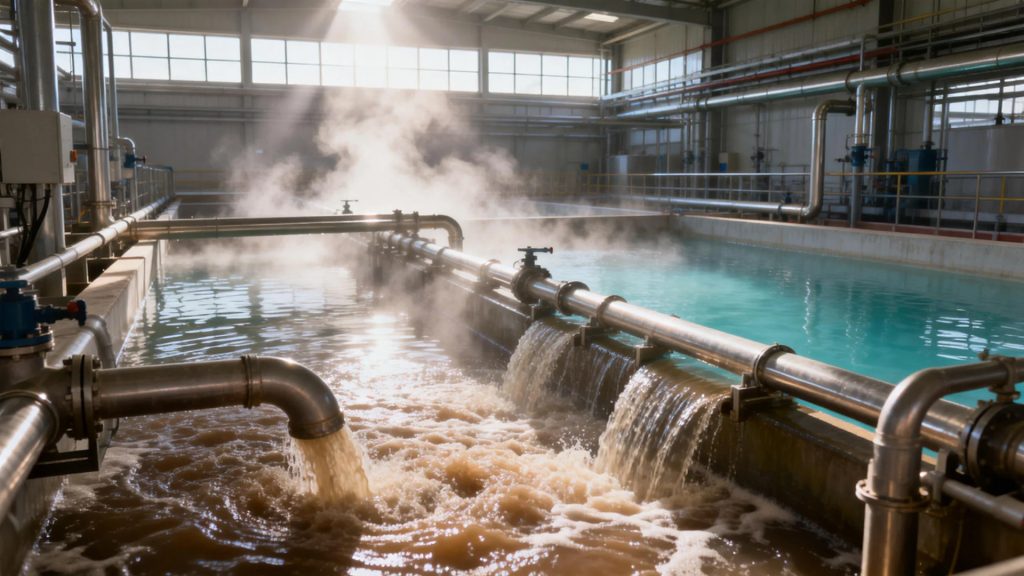
RO Filtration is an important technology for industrial and municipal water reuse because it removes dissolved contaminants from treated wastewater before reuse applications. High-quality reclaimed water can be used for cooling systems, boiler feedwater, irrigation, cleaning, and industrial production. Integrating RO Filtration into water recycling systems reduces freshwater consumption, lowers wastewater discharge, and supports sustainable environmental management while improving overall water resource efficiency.
RO Filtration Benefits for Effective Water Reuse
RO Filtration enables effective water reuse by removing dissolved salts, organic contaminants, and other impurities from treated wastewater. Many reuse applications require higher water quality than conventional wastewater treatment can provide, making RO Filtration an important advanced purification technology. By producing stable-quality reclaimed water, RO Filtration helps industries and municipalities reduce dependence on freshwater sources, improve water efficiency, and achieve sustainable resource management goals.
RO Filtration Applications in Water Recycling
RO Filtration is widely used in water recycling applications such as industrial process water reuse, cooling tower makeup water, boiler feedwater, equipment cleaning, and municipal water recovery projects. Different applications require different water quality levels, system capacities, and treatment configurations. A properly designed RO Filtration system can remove remaining dissolved contaminants from reclaimed water, making it suitable for demanding applications while improving overall water utilization efficiency.
RO Filtration Integration in Water Recycling Systems
RO Filtration is typically integrated with other treatment technologies to create complete water recycling solutions. Pretreatment processes such as filtration, ultrafiltration, or chemical dosing help protect RO membranes from fouling, while post-treatment methods may adjust water characteristics for specific reuse purposes. By combining RO Filtration with complementary technologies, water recycling systems can achieve better purification performance, longer membrane lifespan, and more reliable operation under changing wastewater conditions.
Pretreatment Requirements Before RO Filtration in Water Reuse Systems
Pretreatment plays a critical role in water reuse RO Filtration systems because treated wastewater may still contain suspended solids, organic matter, microorganisms, and scaling compounds. Effective pretreatment reduces membrane fouling risks, improves filtration stability, and extends RO membrane service life. Depending on water characteristics, solutions such as cartridge filtration, ultrafiltration, activated carbon, or chemical dosing may be applied before RO Filtration to maintain consistent performance and reduce maintenance requirements.
RO Filtration Contribution to Sustainable Water Management
RO Filtration supports sustainable water management by helping organizations recycle treated wastewater and reduce freshwater consumption. Industrial facilities can reuse purified water for production processes, cooling systems, and cleaning operations, while municipalities can improve water resource availability through advanced treatment solutions. Optimized RO Filtration systems balance purification efficiency, energy consumption, and maintenance requirements, providing a reliable approach for long-term water conservation and environmental protection.
How Does RO Filtration Benefit Power Generation Applications?
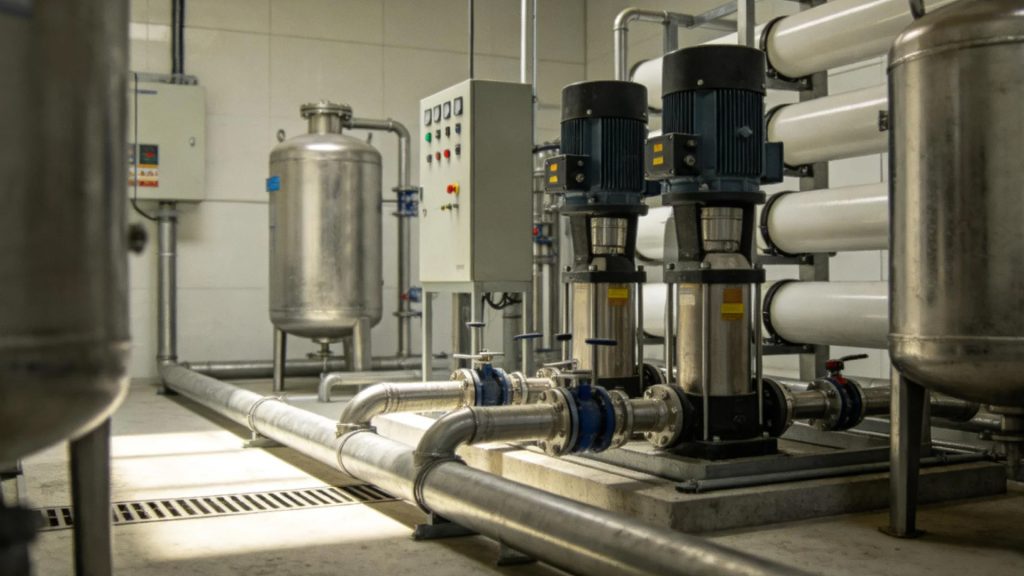
Power plants require high-purity water for boiler feed, cooling systems, and steam generation to prevent scaling and corrosion. RO Filtration effectively removes dissolved minerals and impurities that may damage equipment or reduce operating efficiency. Proper pretreatment, membrane selection, and system monitoring help maintain stable water quality while reducing maintenance requirements and extending equipment service life. Reliable RO Filtration systems support efficient and continuous power generation operations.
Importance of RO Filtration in Power Plant Water Treatment
RO Filtration is an essential technology in power plant water treatment because high-quality water is required to maintain efficient operation of boilers, turbines, and cooling systems. Dissolved minerals and impurities in untreated water can cause scaling, corrosion, and reduced heat transfer efficiency. By removing salts, dissolved solids, and other contaminants, RO Filtration helps power plants produce cleaner process water, improve equipment reliability, and reduce maintenance costs throughout long-term operation.
RO Filtration Support for Boiler Feedwater and Steam Generation
Boiler feedwater quality directly affects the performance and lifespan of steam generation equipment. RO Filtration helps reduce dissolved solids, hardness minerals, and contaminants that may accumulate inside boilers and create operational problems. By providing consistent purified water, RO Filtration supports efficient steam production, minimizes chemical treatment requirements, and helps maintain stable operating conditions. Properly designed systems ensure reliable water quality for power generation processes with demanding purity requirements.
Pretreatment Requirements Before Power Plant RO Filtration
Pretreatment is critical before RO Filtration in power generation applications because raw water may contain suspended solids, organic matter, hardness compounds, and other substances that can affect membrane performance. Filtration, softening, activated carbon treatment, and chemical dosing are commonly used to protect RO membranes from fouling and scaling. Effective pretreatment improves system stability, extends membrane service life, and helps power plants maintain continuous water purification performance with reduced maintenance requirements.
RO Filtration System Performance Optimization in Power Plants
Optimizing RO Filtration performance in power plants requires proper membrane selection, operating pressure control, regular monitoring, and preventive maintenance. Parameters such as conductivity, flow rate, pressure, and recovery rate should be monitored to ensure stable operation. Efficient system design helps reduce energy consumption, prevent membrane degradation, and maintain consistent water quality. A well-managed RO Filtration system improves overall plant efficiency and provides reliable support for continuous power generation activities.
How to Select the Right RO Filtration System for Different Applications?
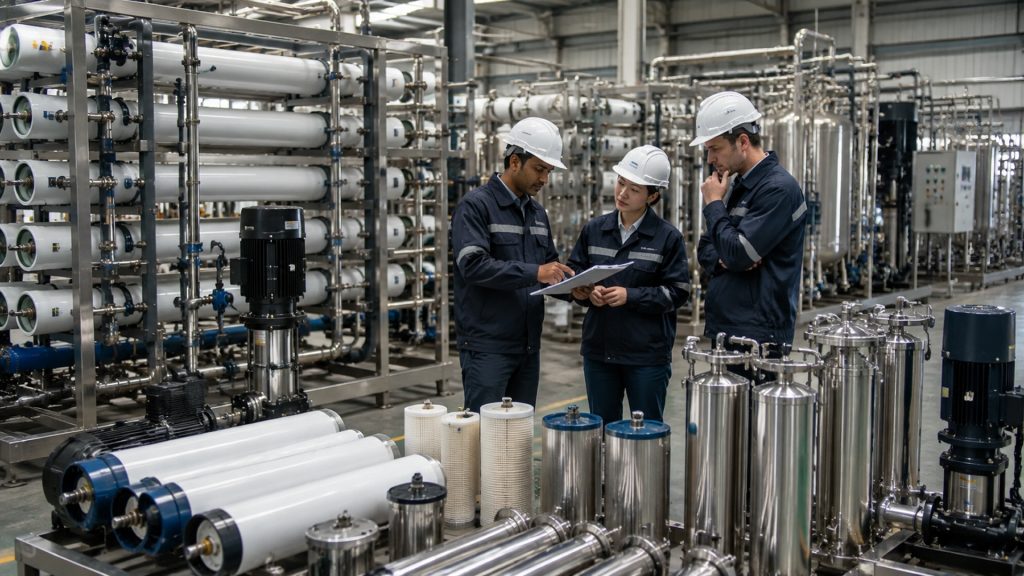
Selecting the appropriate RO Filtration system depends on water source, application requirements, production capacity, water quality objectives, and operating conditions. Different industries require customized membrane types, pretreatment equipment, pressure configurations, and monitoring systems to achieve optimal performance. Evaluating these factors helps engineers choose RO Filtration solutions that provide reliable water purification, lower operating costs, and long-term operational stability across diverse industrial and municipal applications.
Water Source Factors Affecting RO Filtration System Selection
Water source characteristics are one of the most important factors when selecting an RO Filtration system. Different sources, including seawater, groundwater, municipal water, and industrial wastewater, contain different levels of dissolved solids, hardness, organic matter, and contaminants. A detailed water analysis helps determine suitable membrane types, pretreatment requirements, and operating conditions. Properly matching RO Filtration equipment with feedwater characteristics improves purification efficiency, reduces fouling risks, and ensures stable long-term system performance.
Factors Affecting RO Filtration System Selection
| Selection Factor | Why It Matters |
|---|---|
| Water Source | Determines contaminant levels and required treatment processes |
| Qualidade da água de alimentação | Influences membrane selection and pretreatment requirements |
| Required Water Quality | Defines purification targets and system configuration |
| Production Capacity | Determines equipment size and membrane quantity |
| Pressão de operação | Affects energy consumption and filtration efficiency |
| Taxa de recuperação | Influences water utilization and wastewater generation |
| Maintenance Requirements | Impacts long-term operating costs and reliability |
Application Requirements Influencing RO Filtration System Design
Different applications require different RO Filtration system configurations based on water quality targets, production capacity, and operating conditions. For example, pharmaceutical and electronics industries require higher purity water, while industrial processes may focus on equipment protection and water reuse. Factors such as recovery rate, permeate quality, energy consumption, and installation space influence system design. Selecting the right RO Filtration solution helps users achieve the required water quality while maintaining efficient and reliable operation.
Pretreatment Considerations for RO Filtration System Selection
Pretreatment selection is a critical consideration when designing an RO Filtration system because it directly affects membrane performance and service life. Depending on feedwater conditions, pretreatment may include sediment filtration, activated carbon treatment, softening, ultrafiltration, or chemical dosing. Effective pretreatment reduces suspended solids, scaling compounds, and organic contaminants before water reaches the RO membrane. A suitable pretreatment strategy improves system stability, lowers maintenance frequency, and helps maintain consistent filtration performance.
Membrane and Operating Parameter Selection for RO Filtration
Membrane selection and operating parameters have a significant impact on RO Filtration efficiency and water quality. Engineers should consider factors such as salt rejection rate, membrane material, operating pressure, temperature, and recovery ratio when designing a system. Different applications may require different membrane configurations to balance purification performance and energy consumption. Proper parameter selection helps optimize water production, reduce operating costs, and ensure reliable RO Filtration performance under various operating conditions.
Long-Term Performance Management of RO Filtration Systems
Long-term RO Filtration performance depends on proper system design, regular monitoring, preventive maintenance, and effective membrane management. Operators should track key parameters such as pressure, flow rate, conductivity, and recovery rate to identify performance changes early. Routine cleaning and timely maintenance help prevent fouling and scaling while extending membrane lifespan. Choosing an experienced RO Filtration supplier with engineering support also helps ensure reliable operation and sustainable water treatment performance throughout the system lifecycle.
RO Filtration Maintenance Considerations
| Maintenance Item | Purpose | Expected Benefit |
|---|---|---|
| Pressure Monitoring | Detect abnormal operating conditions | Prevent system performance decline |
| Flow Rate Monitoring | Evaluate membrane productivity | Maintain stable water output |
| Conductivity Testing | Check permeate quality | Ensure purification performance |
| Membrane Cleaning | Remove fouling and scaling deposits | Extend membrane lifespan |
| Pretreatment Inspection | Protect RO membranes | Reduce maintenance frequency |